

 English
 русский
 Français
 Español
 عربى
عربى


How Do PC Frame Sunglasses Improve Fit and Comfort?
May 08,2026
Extended wear has a way of exposing the weaknesses in a frame material that short use never reveals. A frame that feels acceptable in a quick trial starts to press into the nose bridge after two hours. The temples create friction at the ears. By the end of a full day outdoors, the discomfort becomes impossible to ignore. For buyers sourcing eyewear at volume, these experience gaps translate directly into return rates, complaints, and reputational risk. Understanding why PC Frame Sunglasses perform differently under extended wear conditions is not just a material science question — it is a product selection decision with real commercial consequences.
What PC Frame Material Actually Is
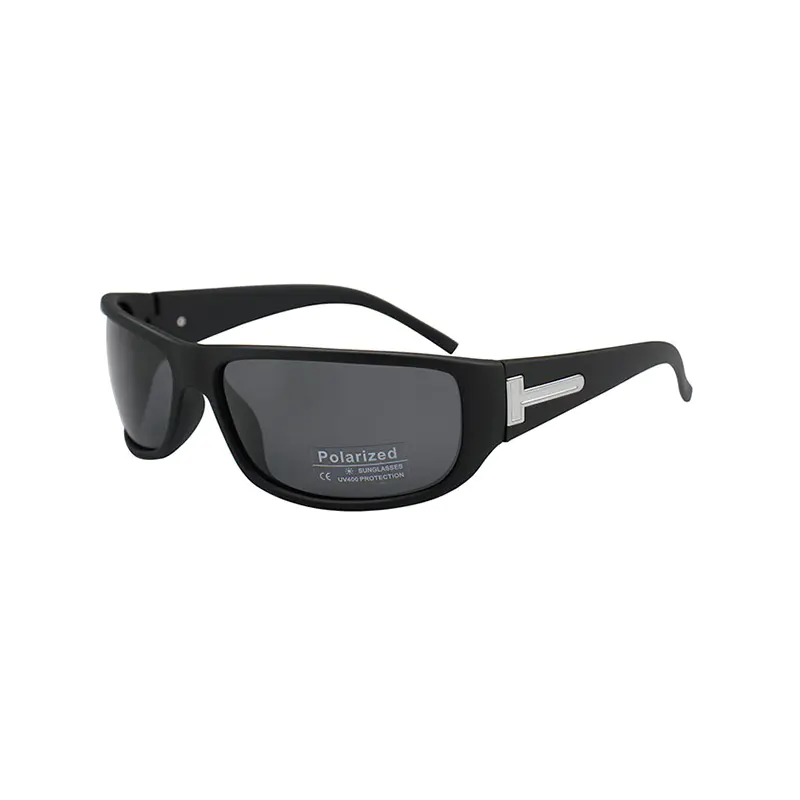
Polycarbonate as an Engineering Thermoplastic
PC, or polycarbonate, is a thermoplastic polymer widely used in optical and eyewear applications because of its combination of low density, high impact resistance, and dimensional stability. It was developed for industrial applications requiring materials that could absorb physical stress without fracturing and maintain their shape under repeated mechanical load.
In eyewear, these properties translate to a frame material that is lighter than standard acetate, more flexible than metal, and more resistant to impact than many other common frame plastics. For sunglasses intended for daily or extended outdoor use, those three characteristics directly address the conditions that make long wear uncomfortable or unsustainable.
How PC Differs from Other Common Frame Materials
Understanding where PC sits relative to other materials clarifies when it is the appropriate specification for a product line. The comparison is not straightforward because each material has trade-offs, and the relevant trade-offs depend on the intended use case.
PC is often grouped with TR90 as a lightweight flexible option, but the two behave differently in use. TR90 has slightly more elasticity and a rubberized surface feel, which works well for close-fitting sport frames. PC has greater rigidity relative to its weight, which suits wider-face designs and frames that need to hold their shape over a longer product lifespan without adjustments.
The Physical Properties That Make Extended Wear More Comfortable
Low Weight Reduces Accumulated Pressure
Frame weight is not a major variable during brief wear. Over several hours, it becomes the primary driver of discomfort. Frames that press down on the nose bridge and pull at the ears are almost always heavier than necessary for the structural role they perform.
PC frames sit at the lighter end of the common frame material spectrum. The material achieves adequate structural rigidity at lower mass than acetate or metal, which means the frame does not need to be thick or heavy to hold its shape. For wearers who spend long periods outdoors — whether in a professional or recreational context — that weight reduction accumulates meaningfully across a day.
Flexibility Without Loss of Structure
A rigid frame that cannot flex even slightly becomes uncomfortable when it no longer sits perfectly on the wearer's face — and no frame fits every face geometry without some adjustment over time. A frame material with no flexibility transfers all movement-related stress directly to the contact points at the nose and ears.
PC has a degree of controlled flexibility that allows it to yield slightly under the small forces associated with facial movement, temperature change, and fit variation. This is not the pronounced elasticity of a sport frame rubber — it is a subtler characteristic that prevents the frame from becoming a rigid clamp over extended wear.
Impact Resistance Reduces the Frequency of Damage-Related Replacements
For outdoor use specifically, frames encounter physical stress that indoor eyewear does not. Being dropped, contact during activity, pressure from storage, and temperature cycling all place demands on the frame material that accumulate over time.
PC absorbs impact energy better than many other frame plastics without fracturing. This characteristic has practical implications beyond safety — it means that PC Frame Sunglasses maintain their structural integrity and fit geometry longer than more brittle materials. A frame that has not been distorted by a minor impact continues to fit as designed, which is relevant to long-wear comfort.
How PC Frame Design Affects Fit Over Time
Nose Bridge Geometry and Its Role in Pressure Distribution
The nose bridge is the primary load-bearing contact point for any frame. The geometry of the bridge — its width, curvature, and angle — determines how the frame's weight is distributed across the nasal bone and soft tissue. A poorly designed bridge concentrates pressure on a small area, which becomes painful within hours.
PC's formability allows manufacturers to produce a wider range of nose bridge geometries than materials that are harder to shape precisely. Adjustable nose pad configurations are also compatible with PC frames, allowing the contact geometry to be tuned for different nasal profiles. Both options serve the goal of distributing load more evenly, which extends comfortable wear time.
Temple Design and Ear Contact
Temples that grip the ears too firmly cause pressure and heat buildup during extended wear. Temples that are too loose allow the frame to shift, which increases adjustment fatigue. The ideal temple applies a consistent, light pressure that keeps the frame positioned without creating discomfort.
PC allows temples to be engineered to specific flex characteristics that are difficult to achieve with metal or brittle acetate. The material can be formed into temple profiles that curve and flex in response to the shape of the ear and head without permanently deforming. Over a full day of wear, this difference in temple behavior contributes meaningfully to overall comfort.
Weight Distribution Across the Full Frame
Comfort is not determined by total weight alone — distribution matters. A frame that is heavy at the front and light at the temples creates a different wear experience than one with balanced distribution. PC's low density makes it easier to achieve balanced weight distribution because less material is needed to provide structural strength.
For wide-lens or wraparound sunglasses that inherently carry more material at the front, PC's density advantage directly supports better weight balance without requiring design compromises that affect the optical or aesthetic qualities of the frame.
Material Comparison for Extended-Wear Sunglasses
Different buyer segments prioritize different properties when specifying sunglasses for long-wear use. A comparison of common frame materials across the characteristics relevant to extended wear follows.
| Property | Polycarbonate (PC) | Acetate | Metal | TR90 |
|---|---|---|---|---|
| Weight | Low | Moderate-high | Variable (generally higher) | Low |
| Flexibility | Moderate controlled flex | Low | High (adjustable) | High elastic flex |
| Impact resistance | High | Low-moderate | Moderate | High |
| Dimensional stability | Good | Good | Very good | Good |
| Nose bridge options | Wide range | Wide range | Adjustable pads standard | Limited |
| Formability for complex shapes | Good | Very good | Limited | Good |
| Suitability for extended wear | Strong | Moderate | Moderate | Strong |
No single material is appropriate for every application. The comparison shows where PC is a practical match for the requirements of long-wear outdoor use, without overstating its advantages in areas where other materials are comparable or stronger.
Use Cases Where PC Frame Sunglasses Perform Well
Outdoor Professional and Work Environments
Workers and professionals who spend sustained periods outdoors — in construction, agriculture, logistics, or field-based roles — need eyewear that remains functional and comfortable across a full shift. Frame discomfort that builds over hours is a distraction and, in some contexts, a safety risk.
PC Frame Sunglasses suit this context because they combine the impact resistance required for environments with physical hazard with the lightweight comfort that makes all-day wear sustainable. The material does not degrade in UV exposure or moderate heat in the way that some plastics do, which supports reliable performance across outdoor conditions.
Sport and Active Use
Sport and active-use sunglasses face a set of demands that differ from casual wear. The frame must stay in position during movement, absorb minor impacts, and continue to fit comfortably after repeated use cycles involving sweat, temperature variation, and physical stress.
PC's controlled flex and impact resistance address these requirements without the frame becoming heavy or structurally loose over time. For brands developing sport sunglasses or lifestyle frames for active consumers, PC is a practical choice at the design specification stage.
Fashion and Lifestyle Frames for Daily Wear
Daily wear sunglasses are used for longer cumulative periods than purpose-built sport frames. Commuters, travelers, and consumers who wear sunglasses as a consistent part of their daily routine accumulate significant wear hours across a product's lifespan.
For this segment, PC frames deliver comfort over those extended periods without requiring the wearer to be conscious of the frame. The goal is a frame that disappears — that fits without reminding the wearer it is there. PC's weight and flexibility profile supports that outcome.
Production and Quality Considerations for Sourcing PC Frames
Consistency in Material Quality Across Production Runs
PC is not a single uniform material — it is available in a range of grades with varying characteristics, and the quality of the raw material affects the performance of the finished frame. Sourcing PC Frame Sunglasses at volume requires suppliers who work with consistent-quality material inputs, not just consistent production processes.
Variation in material quality between production runs produces variation in frame weight, flexibility, and surface finish — all of which affect the end user's experience. For buyers building a product line with consistent performance expectations, supplier material sourcing is a relevant question, not just finished product inspection.
Surface Finish and Its Effect on Wear Experience
The surface of a PC frame can be finished in multiple ways — through coating, painting, or material-integrated coloring. The finish affects the tactile experience of wearing the frame, its resistance to sweat and chemical exposure, and its long-term appearance.
For extended wear specifically, a coating that degrades or becomes tacky with sweat creates a comfort issue that accumulates over the product's life. Buyers specifying PC Frame Sunglasses for daily or active use should confirm with suppliers what finish system is used and how it performs under the conditions relevant to the intended market.
OEM Capabilities and Customization Range
For buyers sourcing under their own brand, the ability to specify frame geometry, color, finish, lens integration, and packaging as a coordinated product development process is relevant beyond the base material decision. PC is a material that supports a wide range of OEM customization options — it can be formed into complex shapes, colored through multiple methods, and finished to different aesthetic standards.
Working with a manufacturer who has demonstrated OEM capability in PC frame construction, rather than one who produces standard catalog frames only, gives buyers more control over the final product's performance characteristics.
Working with a Manufacturer Who Understands the Material
Frame material selection is a starting point. The performance of the finished product depends on how that material is worked — the mould design, the injection parameters, the finishing process, and the quality controls applied throughout production. PC Frame Sunglasses that are specified correctly but manufactured without adequate process control will not deliver the comfort and durability characteristics the material is capable of.
Zhejiang Yani Eyewear Co., Ltd. produces PC Frame Sunglasses for wholesale and OEM buyers across fashion, sport, and daily-use categories. Their manufacturing process covers the full range of customization relevant to brand buyers — frame geometry, color and finish options, lens specification, and packaging — with quality controls applied at material input, production, and finished product stages. If you are evaluating PC Frame Sunglasses for a new product line or looking to source a reliable supply of frames for an existing range, reaching out with your specifications and volume requirements gives their team the context to propose a configuration suited to your market.
 PREV:
PREV:Why UV Protection Matters When Selecting PC Frame SunglassesNEXT:
Precision Trends in Optical Glasses Frames Manufacturing
Your email address will not be published. Required fields are marked *
CATEGORY
NEW PRODUCTS


You can contact us at any time, and we will reply to you within 24 hours.
- 3-11, Optical Mall, No. 777, Huancheng North Road, Duqiao Town, Linhai, Taizhou City, Zhejiang, China.
- +86-576-85885058
- +86-18258841999
- yani@yaniglasses.com
Custom Fashionable Sunglass Manufacturers
