

 English
 русский
 Français
 Español
 عربى



Can Blue Ray Blocking Glasses Relieve Screen Eye Strain
Oct 16,2026
Prolonged screen use is a routine part of office work, study, and daily communication. It is often accompanied by tired, dry, or uncomfortable eyes. Blue light is frequently named as the cause, which has encouraged many people to consider Blue Ray Blocking Glasses. Several other factors also contribute to the discomfort: sustained near focus, reduced blinking, glare, and uncorrected vision.
Separating these factors clarifies what glasses can reasonably address and where other measures are more relevant. The sections below define the key terms, describe the role of different lens features, and outline practical habits for screen work.
Blue Light, Eye Strain, and Dry Eye
Blue light is part of visible light. Daylight contains it, as do screens and indoor lamps. Its presence does not make a source harmful, since the effects depend on intensity, timing, and duration of exposure.
Three terms are often confused: blue light exposure, digital eye strain, and dry eye. They overlap, but each calls for a different response.
| Symptom | Possible Explanation |
|---|---|
| Burning or gritty feeling | Dryness or irritation of the eye surface |
| Temporary blurred vision | Visual fatigue, dry eye, or uncorrected vision |
| Headache after screen work | Sustained effort, posture, or other causes |
| Frequent watering | Irritation or an unstable tear film |
| Trouble refocusing after looking away | Focusing fatigue or a vision concern |
Symptoms alone cannot confirm a diagnosis. Two people may describe the same tired feeling and have different causes behind it.

Digital Eye Strain
This group of symptoms appears during or after long use of computers, phones, and tablets. People report tired eyes, headaches, blurred vision, and discomfort around the forehead.
Screen work keeps the eyes focused at a close distance. Switching between windows, reading small text, and following fine detail all add to the effort. Blinking also drops when attention is fixed on a task, so the eye surface loses moisture faster.
A long meeting spent reading a shared spreadsheet is a familiar example. Nobody looks away, blinking is reduced, and the eyes feel heavy by the end. Blue light was present, but so were several other contributors.
Dry Eye
Dry eye means the tear film is unstable or insufficient. It brings a gritty or stinging feeling, redness, and sometimes watery eyes, because irritated eyes can produce reflex tears.
Air conditioning, heating, a desk fan, contact lenses, and some medications can make it worse. An office with strong airflow near the workstation is a common setting for this complaint.
Blue-light filtering lenses are not designed to treat the causes of dry eye. Ongoing irritation deserves advice from an eye care professional.
What Glasses Can and Cannot Do
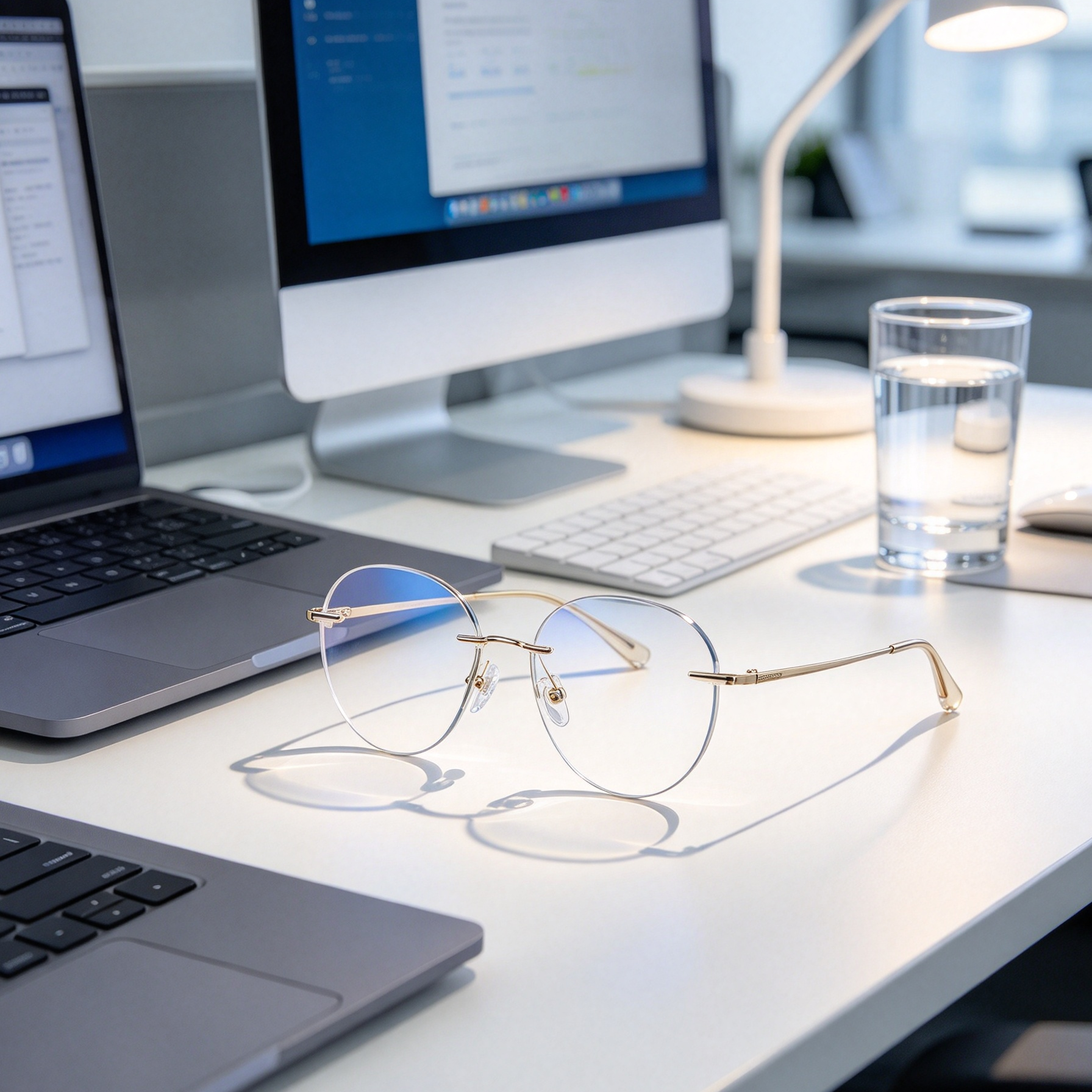
Blue Ray Blocking Glasses filter some blue light, and the amount varies with lens design and coating. Some people find them comfortable at a desk, and that comfort is a reasonable basis for choosing them.
Research has not shown that they relieve digital eye strain for everyone. The symptoms have many causes, and filtering one part of the light spectrum touches only some of them.
| Concern | What the Lenses May Address | What They May Not Resolve |
|---|---|---|
| Blue light exposure | Reduce some light reaching the eyes | Every screen-related discomfort |
| Eye fatigue | May feel comfortable for some users | All causes of visual strain |
| Dryness | Not designed to restore the tear film | Dry eye on their own |
| Near-work discomfort | Can be worn during computer tasks | The need for proper vision correction |
| Evening screen use | May change light reaching the eyes | Better sleep |
A buyer who expects one pair of glasses to resolve every complaint is likely to be disappointed. Treating them as one tool among several gives a more realistic view.
Computer Eye Protection Glasses
The label is broad. Depending on the product, Computer Eye Protection Glasses may include prescription correction, anti-reflective coating, blue-light filtering, or a combination.
Each feature serves a different purpose:
- Anti-reflective coating reduces reflections on the lens surface, which can help in bright rooms.
- Prescription lenses address refractive errors, and some are made for a specific working distance such as the screen.
- Blue-light filtering reduces some of the light reaching the eyes, and the amount differs between products.
Not every pair filters blue light, and not every pair reduces strain. A product name says very little about what the lenses actually do.
Someone who struggles to see the screen clearly, gets repeated headaches, or cannot focus at the workstation may need an eye examination before buying anything. A person who squints at small text may need a different prescription, and no coating will change that.
Habits and Workspace Matter Too
Near Work, Glare, and Posture
Reading small text up close for hours tires the eyes, even on paper. A printed contract read at arm's length for a long stretch can cause the same heaviness as a screen.
Glare from a window or overhead light pushes people to squint and lean toward the display. That adds visual effort and builds tension in the neck and shoulders. A blue-light filter does not remove reflections or correct a poorly arranged desk.
Practical adjustments often help more than expected:
- Place the display so bright windows do not reflect off its surface.
- Match screen brightness to the room instead of leaving it fixed.
- Enlarge text so reading does not require leaning in.
- Keep the screen at a comfortable distance where the eyes can relax.
- Raise or lower the screen so the head stays balanced.
Blinking and Breaks
Blinking spreads tears across the eye. Full, natural blinks help keep the surface comfortable, though they may not be enough for someone with existing dry eye. Breaks give the eyes a rest from fixed focus.
A short pause costs little. Looking out of a window at something distant, walking to refill a water bottle, or standing during a phone call all change the visual task.
| Habit | Why It Helps |
|---|---|
| Looking at distant objects | Gives close-focus effort a rest |
| Full blinking | Spreads tears across the surface |
| Adjusting text size | Removes the need to lean forward |
| Controlling reflections | Reduces squinting and awkward posture |
| Moving during breaks | Relieves neck and shoulder tension |
These habits can be combined with suitable glasses. They do not replace professional care when symptoms persist.
Evening Screens and Sleep
Bright screens late at night can make some people feel less sleepy at their usual hour. Light influences the body's internal clock, and the effect depends on brightness, timing, and individual sensitivity.
Filtering glasses may reduce some blue light, but they do not guarantee better sleep. Stimulating content, stress, and irregular schedules also play a role. Someone who answers work messages in bed may find that the messages, not the light, keep the mind busy.
Lower the brightness in the evening, avoid demanding tasks near bedtime, and leave a gap between screens and sleep. Night display settings change screen color, but they do not remove every factor that delays sleep.
Choosing Wisely and Knowing When to See a Professional
Matching the Product to the Problem
Begin with the problem to be solved. Blurred text may call for vision correction. Reflections may call for a different coating or better lighting. Dry, irritated eyes call for an assessment of the eye surface and not only a filter.
When comparing Blue Ray Blocking Glasses, consider lens function, clarity of view, wearing comfort, and suitability for daily tasks. Filtering varies between products, and stronger filtering does not necessarily mean more relief.
Check how the lenses look in use. A noticeable tint may bother someone who works with color, such as a designer or photo editor. Frame fit matters as well, because glasses that slip down the nose are pushed back up all day and become a distraction.
Reading Product Descriptions
Product descriptions should state what the lenses do without suggesting that they prevent every screen problem. Claims about treating dry eye, headaches, or sleep trouble deserve caution, since results differ between individuals and depend on the working environment.
Look for information on intended viewing distance, lens options, fitting needs, and any limitations the manufacturer states. Clear wording suggests that the seller distinguishes between comfort and medical claims.
For children, people with existing eye conditions, or anyone with lasting symptoms, advice from an eye care professional helps guide the choice.
When to Get Checked
Occasional tiredness often improves with rest and workstation changes. Repeated blurred vision, ongoing dryness, trouble focusing, or regular headaches during computer work merit an eye examination, because an examiner can assess vision, eye surface health, and other possible causes.
Sudden vision changes, significant eye pain, or a marked change in one eye need prompt medical attention. These signs should not be blamed on blue light or handled by changing glasses.
Glasses can be one part of the answer. Vision needs, screen habits, lighting, and eye health together determine how large that part is.
 PREV:
Your email address will not be published. Required fields are marked *
CATEGORY
NEW PRODUCTS
-
-

-

Oct 02,2026

You can contact us at any time, and we will reply to you within 24 hours.
- 3-11, Optical Mall, No. 777, Huancheng North Road, Duqiao Town, Linhai, Taizhou City, Zhejiang, China.
- +86-576-85885058
- +86-18258841999
- yani@yaniglasses.com
Custom Fashionable Sunglass Manufacturers
