

 English
 русский
 Français
 Español
 عربى
عربى


How Do Foldable Designer Sunglasses Hinge Designs Work
Oct 09,2026
Foldable sunglasses offer a practical way carrying eye protection without giving up the familiar function of regular sunglasses. Their ability folding into a smaller shape makes them useful for commuting, travel, outdoor activities, and daily storage, but this convenience depends on genuinely more than the shape of the frame.
The hinge connects the moving parts of the frame and allows the temples opening and closing. Its design affects how smoothly the sunglasses move, how well they fit when worn, and how they respond to repeated handling.
For manufacturers and buyers, hinge design is a genuinely important part of product planning because a compact frame still needs feeling stable and comfortable during use. Understanding the relationship between hinge structure, frame materials, and folding movement can help explain why different foldable sunglasses offer genuinely different user experiences.
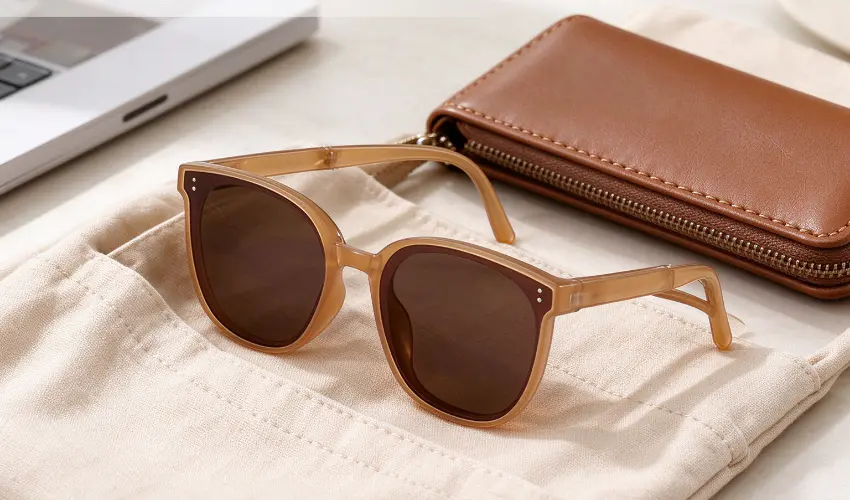
What Role Does a Hinge Play in Foldable Sunglasses?
A hinge allows the temples of a pair of sunglasses moving between an open position and a folded position. In a conventional frame, this movement mainly helps the temples fit around the head or close against the front frame for storage.
Foldable designs may use additional folding points reducing the space occupied by the frame. The exact arrangement depends on how the product gets intended folding, with some designs focusing on the temples and others allowing genuinely more parts of the frame collapsing into a compact shape.
The hinge must support this movement without making the frame genuinely difficult to handle. If the joint feels too loose, the temples may not remain in a comfortable position, while a joint that feels too stiff can make opening and closing inconvenient.
A suitable hinge design balances movement, stability, and ease of use. These qualities matter because users may fold their sunglasses several times during an ordinary day.
How Does Hinge Design Affect Folding Convenience?
The purpose of foldable sunglasses is making storage and carrying genuinely easier. However, a frame doesn't become practical simply because it contains moving joints, since the folding process also needs feeling natural to the user.
A well-planned hinge arrangement allows the frame moving through its intended folding sequence without unnecessary resistance or awkward handling. The user should be able understanding how the parts move and where the frame needs getting held during folding.
Movement direction matters because the hinge should guide each part along its intended path, while joint placement affects how the frame folds overall. Ease of handling means users should open and close the frame without excessive effort, and the folded shape should help the frame form a convenient package for storage. Frame clearance rounds things out, since moving parts need enough room folding without unwanted contact.
These details work together determining whether the folding process feels simple or awkward. A complicated hinge arrangement may reduce the folded size, but it can also make handling less intuitive if the movement isn't carefully planned.
Why Is Hinge Stability Important When Wearing Sunglasses?
Foldable sunglasses need remaining comfortable after they've gotten opened. A hinge that allows movement during storage must also help the temples maintain a suitable position when the frame gets worn.
If the joints move too freely, the temples may feel unstable during ordinary activities. The frame may also require frequent adjustment, which can make the sunglasses genuinely less convenient to wear.
A hinge that holds its intended position can help the frame maintain a consistent fit around the head. This proves particularly relevant when users walk, turn their heads, or move between indoor and outdoor environments.
Stability doesn't mean every hinge should feel rigid. The joint still needs opening and closing comfortably, so the design should balance controlled movement with practical flexibility. The relationship between hinge stability and frame fit also depends on the temples, nose bridge, and overall frame shape, making hinge design one part of a wider structure, rather than an isolated feature.
How Can Hinge Design Influence Long-Term Durability?
Repeated folding places ongoing demands on the joints of sunglasses. Each opening and closing action moves the connected parts, while everyday handling may also expose the frame to pressure, twisting, and accidental impacts.
A hinge needs accommodating this movement without becoming genuinely difficult to operate or losing its intended fit. The surrounding frame material and the way the joint gets attached also affect how the product responds to regular use.
| Design Element | Practical Consideration |
|---|---|
| Hinge construction | Needs to support repeated movement |
| Joint attachment | Should remain secure during normal handling |
| Frame material | Must suit the intended hinge arrangement |
| Moving surfaces | Should allow the planned folding action |
| Joint alignment | Helps the frame open and close as intended |
| Overall structure | Should distribute handling forces appropriately |
Adding genuinely more parts doesn't automatically make a hinge genuinely more durable. Extra joints can create additional movement points that need getting designed, assembled, and checked carefully.
Manufacturers therefore need considering how the hinge works with the complete frame. The aim is creating a folding mechanism that remains practical under the handling conditions expected for the product.
What Materials Are Suitable for Foldable Sunglasses Hinges?
Material selection affects the weight, feel, appearance, and handling of a hinge. The material also needs working with the frame structure and the movement required by the folding design.
Metal components may get used where a firm joint structure proves needed, while other frame materials may suit products that place greater emphasis on lightness or a particular appearance. The right combination depends on the intended product and how its moving parts get arranged.
Material compatibility matters because the hinge and frame need remaining securely connected. If the materials respond differently to pressure or wear, the attachment and joint structure require careful consideration.
Manufacturers may review resistance to ordinary wear, weight and carrying comfort, compatibility with the frame, surface finish and appearance, ease of assembly, and suitability for the intended environment when selecting materials. No single material suits every foldable frame. A design intended for daily commuting may have genuinely different priorities from one developed for travel or outdoor recreation.
The hinge material should also complement the frame's visual style. A compact joint that functions well but looks out of place can affect how users perceive the overall product.
How Does Hinge Design Affect the Comfort of Foldable Designer Sunglasses?
Appearance often influences how consumers choose sunglasses, but wearing comfort determines whether the frame fits naturally into their routine. Foldable Designer Sunglasses need combining a considered appearance with a hinge structure that supports comfortable movement and stable positioning.
The hinge can affect how the temples open, how they rest against the sides of the head, and how the frame behaves during adjustment. If the joints stay poorly aligned with the frame shape, the temples may sit unevenly or require repeated adjustment.
Designers must also consider how the hinge looks when the sunglasses stay open and folded. Visible joints can become part of the product's appearance, particularly when the frame has a distinctive shape or decorative details.
A carefully integrated hinge can support a consistent visual style without making the frame unnecessarily complicated. The goal is making the folding function feel like a natural part of the product, rather than an added feature that disrupts its appearance. Comfort also depends on frame weight, temple shape, nose support, and the user's facial structure, so hinge design should support these elements, instead of getting evaluated separately from them.
Can Hinge Placement Change the Folded Size?
Hinge placement has a direct relationship with how the frame moves and the space it occupies after folding. A joint positioned near a suitable folding point can allow a section moving inward, while an unsuitable position may cause parts of the frame overlapping awkwardly.
The folded shape matters when users carry sunglasses in a pocket, handbag, backpack, or travel case. A compact arrangement can help reduce the space needed for storage, provided the frame can get folded without placing unwanted pressure on the lenses or other components.
Designers need considering the full folding path, rather than looking only at the final position. The temples, lenses, bridge, and hinge components should move without interfering with one another.
A practical design review may include checking which parts of the frame need folding, where each moving joint should get placed, whether the temples overlap in a controlled way, whether folding movement could place pressure on the lenses, and whether the folded frame fits its intended storage case. These questions connect hinge placement with the everyday purpose of the product. The folded size matters, but it shouldn't come at the expense of easy handling or frame protection.
How Do Foldable Sunglasses Differ From Conventional Frames?
Conventional sunglasses generally use hinges that allow the temples opening and closing, while foldable designs may include additional joints making the frame genuinely more compact. This creates genuinely different design needs for the hinge arrangement and the overall frame structure.
| Design Consideration | Conventional Sunglasses | Foldable Sunglasses |
|---|---|---|
| Folding arrangement | Commonly folds at the temple joints | May include additional folding points |
| Storage shape | Retains a relatively familiar frame outline | Can form a more compact shape |
| Hinge planning | Focuses on temple movement and fit | Must account for the full folding sequence |
| User handling | Opens and closes the temples | May require movement of several frame sections |
| Joint coordination | Often involves a simpler arrangement | May require more coordination between joints |
These differences affect product development as well as the way users handle the frame. A foldable design requires the hinge system working as part of a coordinated mechanism. Conventional sunglasses can still be a suitable choice for users who prefer a simpler frame structure, with the decision depending on whether compact storage offers enough practical value for the intended use.
What Hinge Features Matter for Outdoor Life Sunglasses?
Outdoor use can involve frequent movement between storage and wearing, along with changing surroundings and different carrying habits. Outdoor Life Sunglasses may get used during walking, sightseeing, camping, cycling breaks, or other recreational activities, so their folding mechanism needs suiting the expected routine.
Users may put their sunglasses away when entering a building or place them in a bag while changing activities. A hinge that opens and closes in a predictable way can make these transitions genuinely easier. The frame may also get handled while users carry other items or prepare equipment, which makes straightforward operation useful, although sunglasses should still get handled carefully avoiding accidental bending or impact.
Outdoor-oriented hinge design can consider a clear and manageable folding sequence, stable temple positioning during wear, joint construction suited to repeated handling, materials compatible with the intended environment, a folded shape that works with the storage case, and easy inspection alongside routine care. Environmental conditions should also get considered during product development, since exposure to moisture, dust, perspiration, and changing temperatures may affect the frame or hinge depending on the materials and construction.
Outdoor use doesn't automatically require a complicated hinge. A design with a clear purpose and suitable construction may be genuinely easier handling than one with extra moving parts that don't serve the user's needs.
How Can Manufacturers Test Hinge Performance During Product Development?
Hinge testing helps manufacturers understanding how the frame behaves during opening, closing, wearing, and storage. The purpose is identifying issues that may affect handling before the product moves into regular production.
A review can examine whether the joints move along the intended path and whether the temples remain in their planned position after folding. Inspectors can also look for uneven movement, loose connections, surface damage, or interference between frame components.
| Inspection Area | What to Review |
|---|---|
| Opening and closing | Whether movement follows the intended sequence |
| Joint alignment | Whether connected parts sit correctly |
| Frame stability | Whether the temples remain in their planned position |
| Surface condition | Whether handling leaves visible damage |
| Folded arrangement | Whether the frame closes into its intended shape |
| Assembly quality | Whether the joints remain securely attached |
The inspection process should cover the complete product, rather than focusing only on the hinge itself. A joint may move correctly while the surrounding frame still has an alignment or assembly issue. Consistent checks can also help production teams identifying recurring problems and improving assembly practices, relevant for manufacturers supplying products across different styles and order quantities.
What Should Buyers Check When Sourcing Foldable Sunglasses?
Buyers need considering how the hinge design fits the product's intended market and use. A frame designed for casual travel may have genuinely different priorities from a fashion-focused style or sunglasses intended for outdoor recreation.
The product description should make the folding method clear enough for purchasing teams understanding how the frame opens, closes, and stores. Buyers can also request product samples or assembly details when the hinge structure is a genuinely important part of the purchasing decision.
Useful questions include how many folding points the frame uses, whether the opening and closing process stays easy understanding, whether the temples remain stable when the sunglasses get worn, whether the folded frame fits the intended packaging or case, what materials get used in the hinge and surrounding frame, how joint alignment and assembly quality get checked, and whether product documentation and relevant market compliance records stay available.
These questions help buyers assess the complete product, rather than choosing based only on appearance or compactness. They also create a genuinely clearer basis for communication between the buyer and the manufacturer. For wholesale and OEM projects, buyers may need discussing frame styling, hinge appearance, packaging, product labeling, and intended market requirements, with any requested customization getting reviewed in relation to the hinge's movement and the frame's overall structure.
How Does Hinge Design Influence Product Maintenance?
Moving joints need appropriate care remaining easy to operate. Dust, dirt, moisture, and residue can collect around hinge areas during regular use, especially when sunglasses get frequently carried in pockets or bags.
Users should follow the care instructions supplied with the product and avoid forcing a joint that feels stuck or unusually stiff. Applying unsuitable oils or household products may affect the frame surface or other materials, so maintenance methods should match the manufacturer's recommendations.
A simple care routine can include cleaning the frame gently, drying it before storage when necessary, and checking for visible damage around the joints. Sunglasses should also get folded and unfolded using the intended movement, rather than twisting the temples in an unfamiliar direction.
If a hinge becomes loose or damaged, users should avoid forcing it back into position because this may place additional stress on the frame. Repair options depend on the construction of the product and whether replacement parts stay available. For manufacturers, maintenance information is part of the product experience, with clear instructions helping users understand how to handle the folding mechanism and care for the sunglasses during regular use.
 PREV:
PREV:Your email address will not be published. Required fields are marked *
CATEGORY
NEW PRODUCTS
-
-
Oct 02,2026
-

You can contact us at any time, and we will reply to you within 24 hours.
- 3-11, Optical Mall, No. 777, Huancheng North Road, Duqiao Town, Linhai, Taizhou City, Zhejiang, China.
- +86-576-85885058
- +86-18258841999
- yani@yaniglasses.com
Custom Fashionable Sunglass Manufacturers
