

 English
 русский
 Français
 Español
 عربى
عربى


Why UV Protection Matters When Selecting PC Frame Sunglasses
May 15,2026
Many people choose sunglasses for how they look, and that is understandable. But the lens tint that makes a pair of glasses appear protective does not automatically mean UV protection is present. A dark lens without UV filtering actually creates a worse situation than no sunglasses at all — the pupil dilates in the shade the tint creates, allowing more UV radiation to reach the retina than it would under direct sunlight. When evaluating PC Frame Sunglasses for outdoor or everyday wear, UV protection is the specification that determines whether the product is genuinely shielding the eye or simply reducing visible light.
What UV Radiation Actually Does to the Eyes
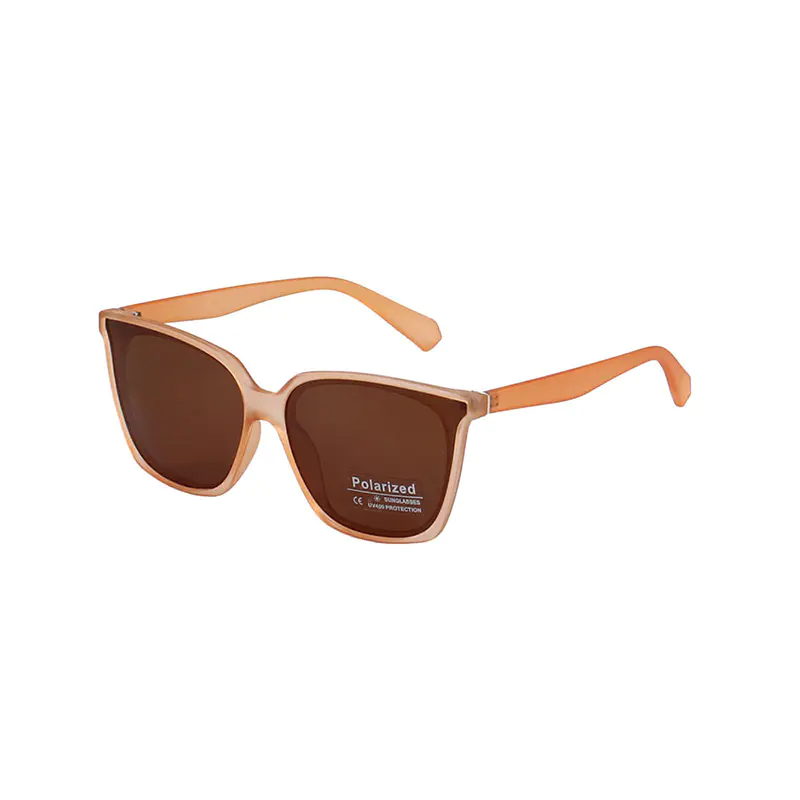
UV Exposure Accumulates Over Time in Ways That Are Not Immediately Visible
Ultraviolet radiation from sunlight is invisible. The damage it causes in eye tissue is also invisible — at least in the short term. UV exposure does not produce immediate pain or obvious symptoms during a day outdoors or a bright morning commute. The effects build across years of repeated exposure, and by the time they become clinically apparent, some of the damage is already set.
The conditions linked to chronic UV exposure in the eyes include cataracts — a clouding of the lens that progressively reduces vision clarity — and macular degeneration, which affects the central field of vision and is a significant cause of vision loss in older adults. Neither condition is reversible. Both are associated with cumulative UV exposure over a lifetime, which is why protection during younger years matters just as much as protection later on.
Short-Term UV Damage Is Also a Real Risk
Beyond the long-term picture, acute UV overexposure can cause photokeratitis — essentially a sunburn on the surface of the eye. It produces significant discomfort, light sensitivity, and temporary vision disruption, usually appearing several hours after the exposure event rather than immediately. High-altitude settings, reflective surfaces like snow or open water, and prolonged unprotected sun exposure are the common triggers.
The eye is not built to handle sustained UV radiation. The structures particularly vulnerable — the cornea, lens, and retina — lack the melanin-based defense that skin uses to manage UV. This makes proper sunglasses genuinely protective equipment rather than a fashion accessory with optional health benefits.
Understanding UV400 and What the Standard Actually Means
UV400 Is a Specific Blocking Threshold, Not a Marketing Term
UV protection in sunglasses is measured by the wavelength range the lens blocks. UV radiation relevant to eye health falls across two bands: UVA and UVB. UVA has longer wavelengths and penetrates deeper into eye tissue; UVB has shorter wavelengths and primarily affects the surface structures.
UV400 refers to blocking UV radiation up to a wavelength of 400 nanometers — a threshold that covers both UVA and UVB effectively. A lens certified to UV400 provides meaningful protection across the full range of UV radiation that reaches the eye from sunlight under normal outdoor conditions.
The standard matters because lenses without UV400 certification may block visible light while allowing UV to pass through. A buyer who selects sunglasses based on lens darkness or color alone may be getting significantly less protection than the product's appearance suggests.
Does Lens Color Indicate UV Protection?
It does not. This is a common and consequential misunderstanding. Lens color — whether grey, brown, green, yellow, or mirrored — affects which visible wavelengths are transmitted and how the wearer perceives color and contrast. It has no relationship to UV blocking performance.
A clear or lightly tinted lens with UV400 treatment provides full UV protection. A dark lens without UV treatment provides no UV protection while creating the pupil-dilation effect mentioned earlier. The UV protection function comes entirely from the lens material or the coating applied to it — not the visible tint.
How Polycarbonate Frames and Lenses Provide UV Protection
PC Material Blocks UV Radiation Naturally at the Material Level
Polycarbonate — the material used in PC Frame Sunglasses — has inherent UV-absorbing properties. Unlike some materials that require a surface coating to achieve UV protection, polycarbonate absorbs UV radiation through the bulk of the material itself. This means the UV protection is not dependent on a coating that can scratch, wear, or peel over time.
For everyday sunglasses that get regular use, this built-in protection is a practical advantage. A coated glass or plastic lens that scratches through the UV-protective layer from normal wear gradually loses protection where the coating has been removed. A polycarbonate lens maintains its UV absorption properties throughout the full thickness of the material, regardless of surface condition.
What Makes Polycarbonate a Practical Frame and Lens Material?
Beyond UV performance, polycarbonate offers a combination of properties well suited to outdoor and active use:
- Lightweight construction — polycarbonate is noticeably lighter than glass and denser plastic materials, which matters for comfort during extended wear
- Impact resistance — polycarbonate withstands impact significantly better than glass or standard optical plastic, making it appropriate for sports, work environments, and active outdoor use
- Flexibility — PC frames can flex under force without breaking, reducing the chance of frame failure during physical activity or accidental impact
- Dimensional stability — polycarbonate holds its shape under heat and humidity variation better than some lower-density plastics, maintaining fit over time
The combination of natural UV absorption and physical durability makes polycarbonate a genuinely functional material choice for sunglasses, not just a cost-reduction decision.
Why Frame Design Affects UV Protection in Practice
Coverage Area Determines How Much UV Actually Reaches the Eye
A lens that is certified to UV400 only protects the area it covers. Peripheral UV exposure — light entering from above, below, or the sides of the frame — bypasses the lens entirely and reaches the eye directly. This is why frame design matters alongside lens certification.
Wraparound and close-fitting frame styles reduce peripheral UV exposure by extending the lens coverage toward the temples and cheekbones. For outdoor activities where reflected UV from ground or water surfaces is significant, a frame with wider coverage provides meaningfully more protection than a narrow or fashion-oriented frame with the same lens certification.
Does Fit Affect How Long Sunglasses Can Be Worn Comfortably?
It does, in a way that is easy to underestimate. Sunglasses that sit uncomfortably on the nose bridge or apply uneven pressure on the temples create wearing fatigue that leads to the glasses being removed — which eliminates the UV protection they provide. A frame that fits well can be worn through extended outdoor activity without the user noticing the glasses are there.
Adjustable nose pads, flexible temple arms, and frame widths matched to the wearer's face geometry all contribute to sustained comfortable wear. For PC Frame Sunglasses intended for sports use or extended outdoor sessions, fit retention during movement is an additional consideration — a frame that slides down the nose during activity requires adjustment that interrupts use.
Comparing UV Protection Across Common Sunglass Lens Materials
How polycarbonate compares to other common sunglass materials across the specifications relevant to UV protection and everyday durability:
| Lens Material | UV Protection Mechanism | Impact Resistance | Weight | Scratch Resistance | Suitable for Active Use |
|---|---|---|---|---|---|
| Polycarbonate | Inherent UV absorption in material | High | Low | Moderate | Yes |
| Standard CR-39 plastic | Requires UV coating | Moderate | Moderate | Moderate | Limited |
| Glass | Requires UV coating | Low | High | High | Limited |
| Nylon / Grilamid | Requires UV coating | High | Low | Low | Yes |
| Trivex | Inherent UV absorption | High | Low | Moderate | Yes |
Polycarbonate and Trivex share the inherent UV absorption advantage over glass and standard plastic, but polycarbonate is more widely available across product price ranges and is the material of choice in everyday PC Frame Sunglasses, sports eyewear, and protective applications.
What to Check When Evaluating UV Protection in PC Frame Sunglasses
Certification and Labeling Are the Verifiable Starting Points
When reviewing sunglasses for UV protection adequacy, the product labeling and certification documentation are the places to start. Relevant checks include:
- Confirmation of UV400 rating on the lens specification, not just the packaging
- Whether the UV protection is material-based (polycarbonate) or coating-based (relevant to durability over time)
- Frame coverage area relative to the intended use — sport or outdoor applications benefit from wider coverage
- Whether the frame material is PC throughout or mixed with lower-quality plastics at contact points
For buyers sourcing sunglasses at volume — retail, promotional, or wholesale supply — documentation of UV certification by production batch is the check that ensures the protection level claimed on the product matches what is actually present in the lenses.
Does UV Protection Degrade Over Time?
For polycarbonate lenses, the UV absorption is a property of the material rather than a surface treatment, so it does not degrade through normal use the way a coating can. The lens protection remains consistent across the usable life of the product.
Coated lenses are a different situation. Scratches, cleaning with abrasive materials, and chemical exposure can degrade UV coatings over time. For consumers keeping sunglasses for several seasons, or for buyers evaluating long-term product performance, understanding whether the UV protection is material-based or coating-based is relevant to how protection holds up with regular use.
Choosing PC Frame Sunglasses With Genuine UV Protection
The connection between sunglasses and eye health is real, but it depends entirely on whether the glasses actually block UV — not on how they look or how dark the lenses are. Polycarbonate frames and lenses provide a practical, durable foundation for UV protection, combining inherent UV absorption with the physical properties that make the frame viable for active outdoor use over time. For retailers, distributors, and buyers sourcing China UV resistant sunglasses or building a product range around UV-protective eyewear, the manufacturing quality of the lens material and the certification process behind the UV rating are the variables that determine whether the product delivers on its health protection claim across a full production volume. Zhejiang Yani Eyewear Co., Ltd. produces PC Frame Sunglasses with UV400 protection across a range of frame styles and lens configurations for everyday outdoor, sports, and promotional applications. Contacting their team to discuss product specifications, UV certification documentation, order volumes, or custom design requirements is a practical step toward evaluating whether their manufacturing range fits your sourcing needs.
 PREV:
PREV:Why Choose PC Frame Sunglasses for Outdoor Comfort?NEXT:
How Do PC Frame Sunglasses Improve Fit and Comfort?
Your email address will not be published. Required fields are marked *
CATEGORY
NEW PRODUCTS


You can contact us at any time, and we will reply to you within 24 hours.
- 3-11, Optical Mall, No. 777, Huancheng North Road, Duqiao Town, Linhai, Taizhou City, Zhejiang, China.
- +86-576-85885058
- +86-18258841999
- yani@yaniglasses.com
Custom Fashionable Sunglass Manufacturers
