

 English
 русский
 Français
 Español
 عربى



Are Non-Slip Nose Pads Essential for Workout Sunglasses
Nov 20,2026
Halfway through a run, sweat gathers at the bridge of the nose and the frame starts to creep down. Most wearers push it back with a knuckle, then do it again a minute later. Workout Sunglasses, Lightweight Sports Sunglasses, and Custom Sports Sunglasses all face this problem, and the nose pad is where it is often won or lost. Non-slip pads reduce sliding and cut down on repeated adjustments. Grip is only one part of the picture, though. Frame weight, nose shape, temple fit, and material choice also decide how a pair behaves in motion.
Why Sports Sunglasses Need Non-Slip Nose Pads
Everyday eyewear rarely faces sweat, bouncing steps, or forward-leaning postures. Sports eyewear faces all three, so frame stability changes over the course of a session.
Sweat Reduces Friction
Perspiration collects around the nose and brow. Once moisture reaches the contact area between pad and skin, the frame can begin to slide. On a run or a long ride, this becomes a steady distraction.
Non-slip pads use soft materials and textured surfaces to keep contact with the skin. The aim is to hold the frame without pressing hard on the nose.
Movement Calls for a Stable Fit
A runner scans the road, a cyclist leans over the handlebars, and a gym-goer jumps between exercises. Each posture shifts the frame differently. A frame that moves forces the wearer to use a hand, which breaks rhythm during a group class or a race.
Comfort Counts as Much as Grip
Extra friction should not mean extra pressure. A hard or poorly placed pad can leave marks or aches during a long workout, especially when the frame does not match the wearer's nose. Good design balances contact area, softness, frame balance, and fit.
How Non-Slip Nose Pads Hold a Frame in Place
Grip comes from material, surface texture, and frame construction working together. A pad cannot rescue a frame that is the wrong size, but a suitable pad improves stability on a frame that fits.
| Pad Material | Characteristics | Design Consideration |
|---|---|---|
| Silicone | Soft and flexible | Gentle skin contact and useful grip |
| Rubber | Flexible with a textured feel | Fits active eyewear designs |
| Hard plastic | Firm and light | Needs careful shaping to limit pressure points |
Silicone and rubber are common in sports frames because flexibility helps them follow the skin. Ease of cleaning matters too, since sweat, sunscreen, and skin oils build up on the surface.
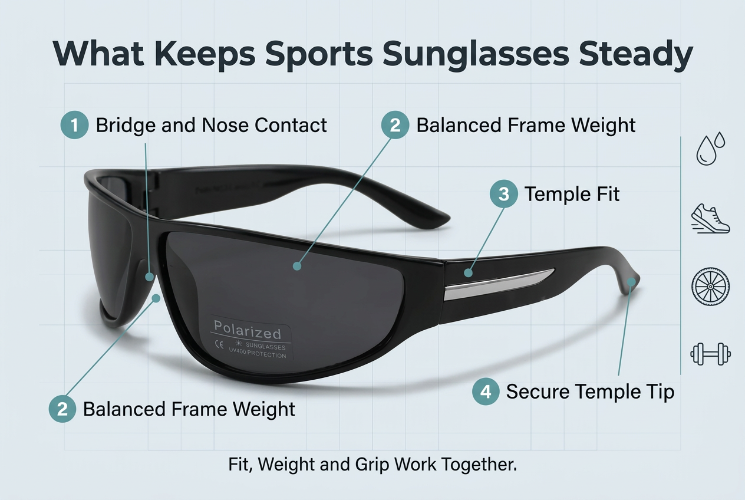
Shape also plays a role. A curved pad spreads contact over a wider area, while a small contact patch may press at one point. Adjustable pads let the wearer change frame position, and integrated bridges depend on the overall frame shape.
Balance matters as well. Heavy lenses or a front-heavy frame can overcome a good pad. Designers should treat the pad as part of the full structure, not an isolated part.
Non-Slip Pads Compared With Standard Pads
The difference goes beyond rubber versus plastic. Surface properties, flexibility, shape, and frame compatibility all count.
| Feature | Non-Slip Pads | Standard Pads |
|---|---|---|
| Grip | Built for added traction | Depends on material |
| Stability | Helps limit frame movement | Depends on fit and structure |
| Skin contact | Often flexible materials | Varies by design |
| Upkeep | Regular cleaning | Regular cleaning |
| Use | Active movement | Casual wear |
A standard pad on a well-fitted frame can still hold steady. The gap shows when moisture changes during exercise or when the head moves repeatedly. Softness does not guarantee comfort either. A soft pad placed badly can still press or let the frame shift.
Both types need care. Wipe sweat and oils off with a soft cloth and a suitable eyewear cleaner, and replace pads that are loose, cracked, or deformed.
Do All Workout Sunglasses Need Them?
Activities differ in how much grip they demand.
- Running and cycling: Repeated vertical motion and forward-leaning postures push frames around. Workout Sunglasses with flexible pads and secure temple tips help. Cyclists also benefit from frames that clear a helmet and do not press on the nose or ears.
- Gym training: Strength sessions, circuits, and classes bring changing body positions and heavy sweating. Soft pads and a balanced frame keep glasses from becoming a distraction.
- Casual outdoor use: Walking and relaxed recreation need less grip. A light frame with a well-shaped bridge may be enough.
Think about how you actually move rather than choosing features because they appear on a spec sheet.
Lightweight Sports Sunglasses Need More Than a Light Frame
Lightweight Sports Sunglasses reduce the sense of carrying something on the face. Low weight alone does not keep a frame steady.
A lighter front lowers pressure on the nose bridge, which helps during long hours in sunlight. Weight savings should not remove structural support, or the frame may flex and shift.
When choosing, look at:
- Softness and flexibility of the pad
- Surface texture and grip
- Compatibility with the frame structure
- Contact area and pressure spread
- Ease of cleaning and replacement
Temple tips deserve equal attention. They stop the rear of the frame from moving and keep it seated around the ears. Pads and temple tips together create a steady fit.
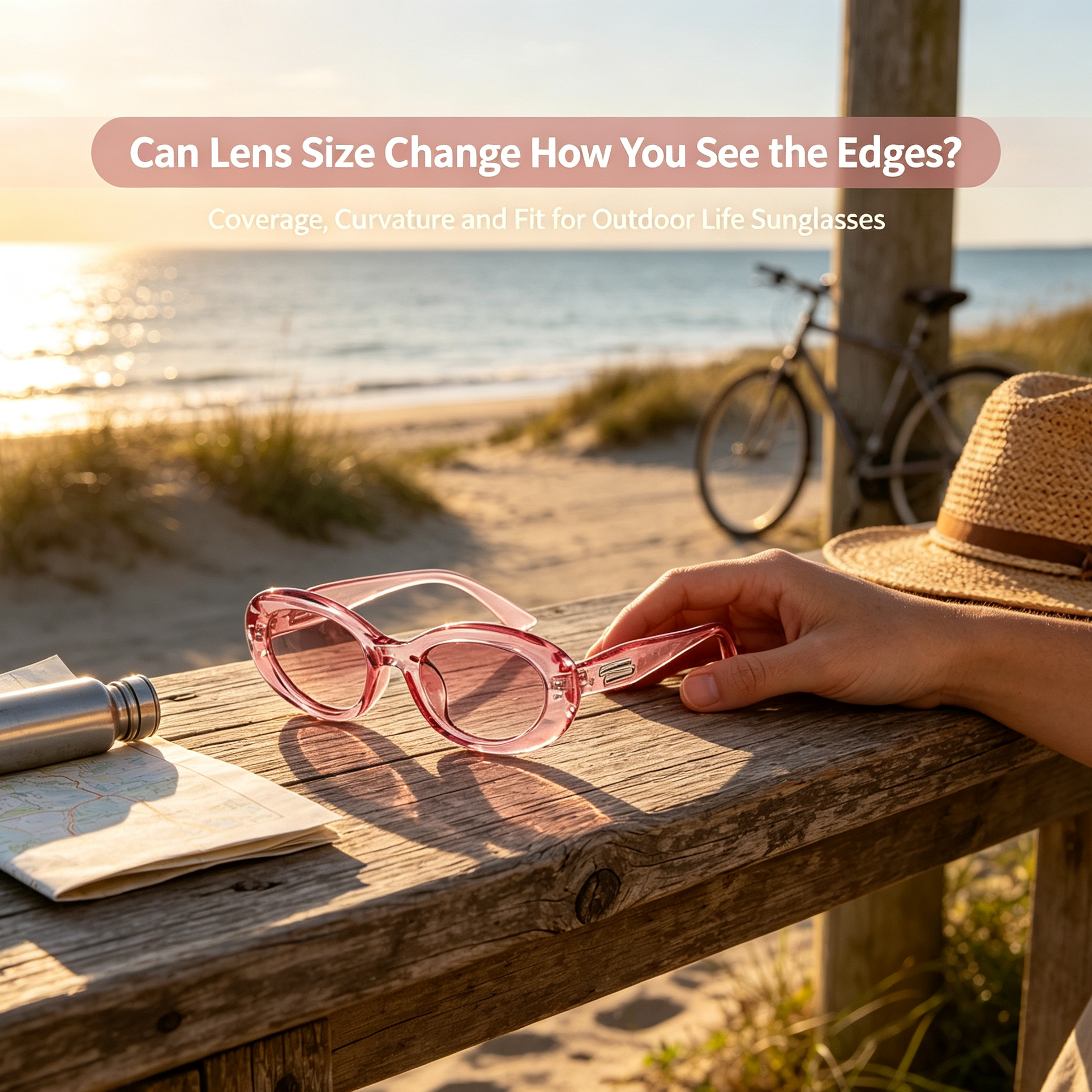
Lens size is another choice. Large lenses give more coverage but add weight. Runners and cyclists may like coverage with some airflow around the lens, while gym users may prefer a lighter build over a large profile.
Developing Custom Sports Sunglasses
For eyewear brands and distributors, pad choice shapes both function and customer experience. Custom Sports Sunglasses allow changes to frame structure, pad materials, and temple details for each target market.
Product positioning guides material choice. A running line may favor grip and flexibility, while a lifestyle line may give more weight to appearance and everyday comfort. Evaluate softness, texture, cleaning needs, and compatibility with the frame.
One bridge design will not suit every face. Consider different bridge widths, adjustable or integrated structures, curved contact surfaces, and flexible materials. Test with people of varied facial structures to find pressure points and stability problems early.
| Category | Design Focus | Suggested Features |
|---|---|---|
| Running | Movement stability | Flexible pads, secure temple tips |
| Cycling | Forward-facing comfort | Light frame, suitable lens coverage |
| Workout | Sweat management | Flexible contact materials, stable build |
| Outdoor sports | Everyday comfort | Suitable coverage, durable materials |
Matching each collection to a defined use works better than applying one design to every sport.
Discussing Requirements With a Manufacturer
Clear communication saves rounds of sampling. Buyers should cover:
- Target market: intended users and sports
- Frame construction: material, dimensions, flexibility, and weight
- Pad design: preferred material, shape, and adjustment options
- Temple construction: grip, fit, and comfort
- Sample evaluation: wear testing for fit, pressure, and movement
- Brand presentation: colors, finishes, logos, and packaging
A manufacturer familiar with sports frame construction can coordinate these points during development. Brands planning a new collection can contact our team to discuss specifications, frame preferences, and customization.
Caring for Non-Slip Nose Pads
Sweat, sunscreen, and daily dirt collect on pad surfaces.
- After workouts: Wipe contact surfaces with a soft cloth and eyewear cleaner. Avoid harsh chemicals that can harden or damage the material.
- Inspection: Look for wear, deformation, looseness, or surface damage, and replace worn parts with compatible ones.
- Storage: Keep glasses in a protective case. Avoid hot cars and heavy objects on the frame, since pressure can bend the bridge or flatten the pads.
Choosing With Movement in Mind
Non-slip pads improve stability, but results depend on how material, shape, frame weight, and temple construction work together. Wearers should match features to their activity, and brands should match product lines to defined uses. Wholesalers, distributors, and brand owners developing Workout Sunglasses, Lightweight Sports Sunglasses, or Custom Sports Sunglasses can contact our team to explore frame customization and shape a product concept for their target customers.
 PREV:
Your email address will not be published. Required fields are marked *
CATEGORY
NEW PRODUCTS
-
-
Nov 13,2026
-

You can contact us at any time, and we will reply to you within 24 hours.
- 3-11, Optical Mall, No. 777, Huancheng North Road, Duqiao Town, Linhai, Taizhou City, Zhejiang, China.
- +86-576-85885058
- +86-18258841999
- yani@yaniglasses.com
Custom Fashionable Sunglass Manufacturers
