

 English
 русский
 Français
 Español
 عربى



Nylon Vs Acetate Frames: Which Material Is Better for You
Nov 06,2026
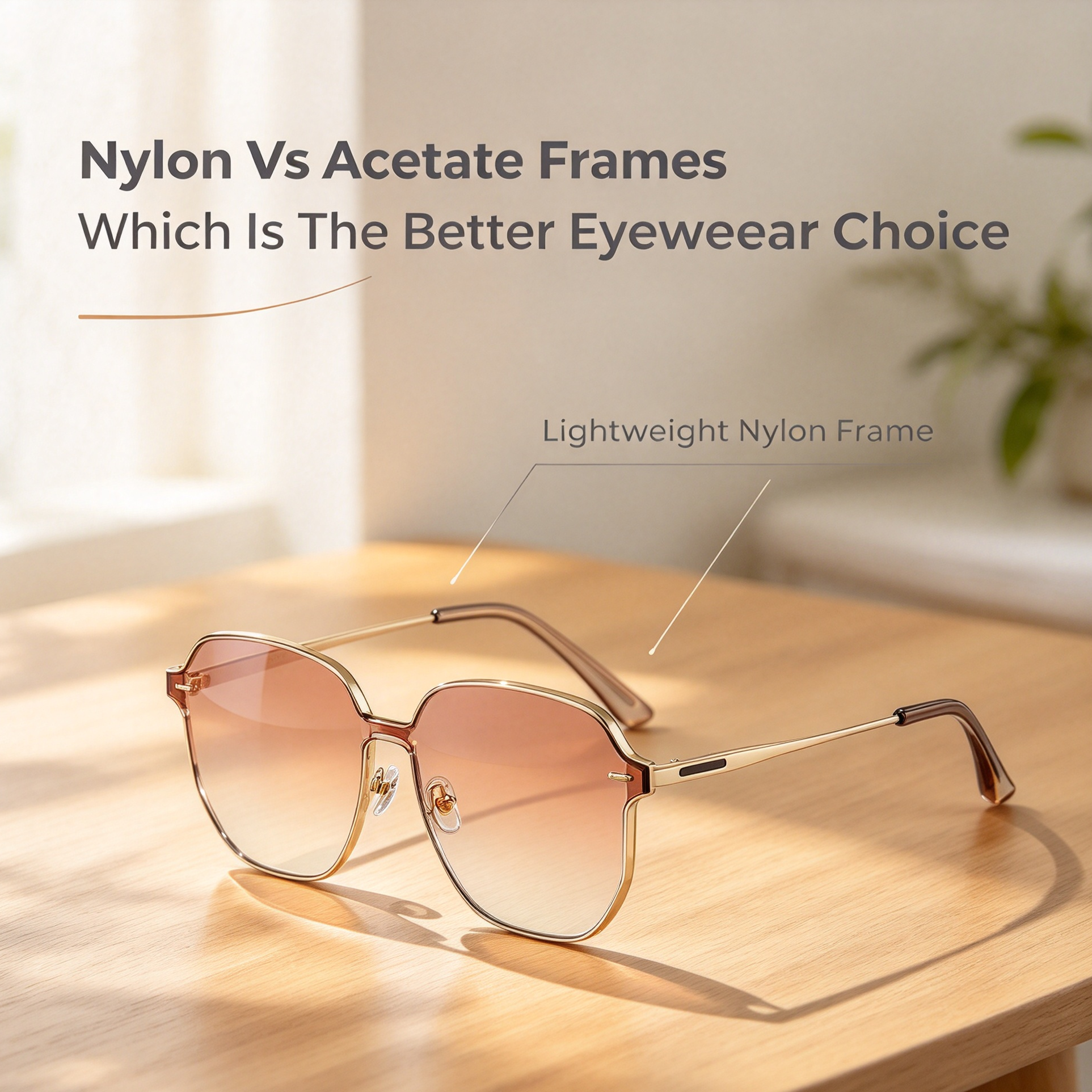
Glasses sit on the nose and ears from the morning commute to the last email of the evening. A frame that feels heavy or cracks after a drop in a bag becomes a daily irritation. Nylon has gained a place in eyewear because it allows a light build with some give under pressure. The Nylon Vs Acetate Frames question comes up often among buyers and designers, since the two materials serve different goals. Looking at weight, flexibility, construction, and care shows where each one fits.
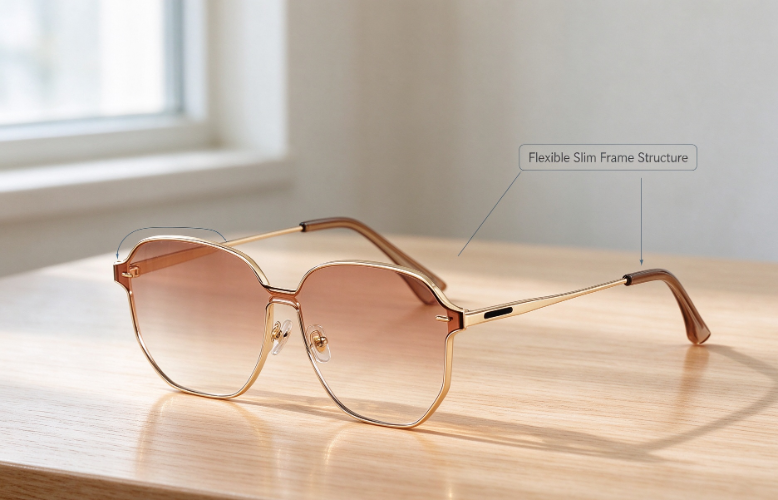
What Makes Nylon a Lightweight Eyewear Material?
Nylon is a polymer that can be molded into slim, light frame structures without relying on a thick, heavy build. Weight matters because glasses carry their load on two small contact points. A small difference in feel becomes noticeable after several hours, and a lighter frame tends to leave less pressure marks beside the nose and behind the ears.
Nylon also gives designers room to shape components. Thin temples, sport wraps, and rimless-style supports can all be produced from it, which suits people who move around a lot.
| Design point | How nylon can help |
|---|---|
| Frame weight | Supports a light build |
| Flexibility | Allows some movement under everyday stress |
| Shape | Suits slim and wraparound forms |
| Comfort | Can reduce the feeling of heaviness |
| Daily handling | Fits active routines |
Light weight alone does not guarantee comfort. Nose bridge fit, temple curve, and the balance between front and sides decide how glasses sit. A well-proportioned nylon frame feels natural, while a poorly fitted one can slide or pinch no matter how little it weighs.
How Does Nylon Handle Everyday Impact?
Glasses get knocked against desks, squeezed in backpacks, and pulled off with one hand. Each situation puts a different kind of stress on the frame. Nylon can bend a little instead of resisting like a fully rigid material, which may reduce the chance of snapping under certain knocks.
Design still decides the outcome. A flexible material with weak joints will fail at the joints. Several areas deserve attention:
- Front frame: holds the lenses and keeps its shape
- Bridge: connects both sides and takes pressure during handling
- Temples: open, close, and rest against the head
- Hinges: face repeated movement and contact
- Lens grooves: hold the lenses without straining the frame
Impact resistance belongs to the finished product, not only the raw material. Thickness, shape, joint design, and production consistency all play a role. No frame is unbreakable, and strong bending, a heavy object placed on top, or a hot car dashboard can still cause damage.
Why Does Flexibility Matter for Durability?
A rigid frame feels firm but can be less forgiving when twisted. A flexible one spreads some of the force instead of sending it all to one small spot. People who take glasses on and off many times a day, or who carry them loose in a bag, may notice the difference.
Too much flexibility causes its own problems. A frame that bends too easily may not hold the lenses in position or keep its shape on the face. Makers aim for a balance, considering:
- Frame shape that distributes pressure
- Joint design that moves smoothly without looseness
- Temple construction that grips securely and comfortably
- Lens support that keeps lenses properly placed
- Material consistency across all parts
Material choice and product engineering need to work together. Flexibility helps only when the structure remains stable.
How Do Nylon and Acetate Frames Compare?
Both materials are common in eyewear, and the right pick depends on what the wearer values. Nylon is linked with light construction and flexibility, which suits active routines. Acetate is known for rich color, layered patterns, and a solid feel, which suits fashion-focused styles where the frame is a visible design feature.
| Area | Nylon frames | Acetate frames |
|---|---|---|
| Weight | Often used for light designs | Can feel more substantial |
| Flexibility | Accommodates some movement | Generally firmer |
| Impact handling | Useful where give is valued | Depends on composition and design |
| Appearance | Practical, modern styles | Varied colors and visual effects |
| Direction | Active or lightweight eyewear | Fashion-focused designs |
| Wearing feel | Light and flexible | Solid and structured |
Neither material suits every person. A well-fitted acetate frame can feel more comfortable than a poorly fitted nylon one, so buyers should weigh material, design, and fit together.
Can Nylon Frames Support an Active Lifestyle?
People who wear glasses while jogging, cycling, hiking, or working on their feet often care more about weight and stability. Nylon supports a light build, and its flexibility helps the frame cope with movement.
| Activity | Frame consideration |
|---|---|
| Walking and commuting | Comfortable weight, stable fit |
| Outdoor recreation | Material suited to regular handling |
| Exercise | Secure position during movement |
| Travel | Easy storage, everyday durability |
| Office work | Comfort over long hours |
The frame should match the activity. Sports use may need features that keep glasses in place, such as grippy temple tips or a wrap shape. Ordinary fashion eyewear should not be treated as protective sports gear, and lens choice matters when contact is likely.
Which Other Design Features Affect Comfort and Durability?
The bridge needs to rest comfortably on the nose. Temples should fit without squeezing the sides of the head. The front should be balanced so the glasses do not tip forward or drift during movement.
Hinges and joints undergo repeated opening and closing, so poor assembly can cause looseness or cracks around the pivot. Lens installation also requires care, as the frame needs to hold each lens securely without putting excessive pressure on its edges.
A design review can cover frame balance, bridge shape and contact area, temple length and curve, hinge construction, lens positioning, edge finishing, and surface quality. A light material cannot make up for a poor fit. Manufacturers who test fit and joints before shipping catch many problems early.
How Should Buyers Choose Between Materials?
Consider everyday use. Someone who wears glasses throughout the day may prioritize lightweight construction and reduced pressure on the nose. An outdoor enthusiast may pay more attention to flexibility and handling, while a style-conscious buyer may focus on color, shape, and finish.
Nylon is worth considering when light weight and flexible handling matter. Acetate suits buyers who prefer a substantial look and wider visual variety.
| Buyer priority | What to review |
|---|---|
| Everyday comfort | Weight, bridge fit, temple shape |
| Active use | Intended application, frame stability |
| Appearance | Color, finish, proportions |
| Durability | Material, joints, construction |
| Lens compatibility | Frame design and lens fitting |
| Maintenance | Cleaning and storage instructions |
Read product information instead of assuming all nylon frames behave alike, since formulations and construction vary. Wholesale buyers and eyewear brands should also look at consistency across batches, including shaping, joint assembly, finishing, and inspection. Knowing the target customer helps, because frames for office wear have different priorities from those built for outdoor use.
How Can Care Extend Frame Life?
Handle glasses with both hands, since pulling them off by one temple strains the hinge. Store them in a case instead of loose in a bag, where keys and tools can scratch or bend them.
Useful habits include:
- Keep glasses in a protective case when not worn.
- Avoid placing heavy objects on top of them.
- Do not bend temples past their intended movement.
- Clean as the manufacturer instructs, using a soft lens cloth.
- Check hinges if the frame starts to feel loose.
- Seek professional adjustment when the fit changes.
Heat and harsh cleaning products can affect some frame materials, so avoid leaving glasses on a car dashboard or in direct summer sun. These habits do not make a frame immune to wear, but they help preserve fit and appearance during regular use.
 PREV:
Your email address will not be published. Required fields are marked *
CATEGORY
NEW PRODUCTS


You can contact us at any time, and we will reply to you within 24 hours.
- 3-11, Optical Mall, No. 777, Huancheng North Road, Duqiao Town, Linhai, Taizhou City, Zhejiang, China.
- +86-576-85885058
- +86-18258841999
- yani@yaniglasses.com
Custom Fashionable Sunglass Manufacturers
