

 English
 русский
 Français
 Español
 عربى



Do Blue Ray Blocking Glasses Improve Sleep Before Bed
Oct 23,2026
Evenings often involve videos, messages, a tablet, or unfinished work on a computer. By bedtime the eyes are tired, yet the mind can still feel alert. Some people add Blue Ray Blocking Glasses to this routine, hoping the lenses will make winding down easier.
Whether they help depends on several variables: the lens design, the brightness of the room, the timing of screen use, and each person's habits. Eye comfort is a separate question from sleep. A pair of Computer Eye Protection Glasses may serve vision correction or reflection control without having any bearing on falling asleep.
Light, the Body Clock, and Sleep
Light tells the body whether it is day or night. The eyes send this information to the brain, which uses it to adjust the internal clock. That clock influences when a person feels alert and when sleepiness begins.
Blue light is one part of daylight, and it is also present in screens and indoor lighting. Bright light in the evening can shift the timing of sleep signals, particularly when exposure continues close to bedtime. Sensitivity differs between individuals. Work schedules, stress, caffeine, and irregular sleeping hours can matter just as much.
| Factor | Possible Relationship With Sleep |
|---|---|
| Evening light exposure | May influence the sense of day and night |
| Screen brightness | Changes the amount of light reaching the eyes |
| Timing of screen use | Matters when use continues near bedtime |
| Personal sensitivity | People respond differently to similar conditions |
| Sleep routine | Irregular habits can shift sleep timing |
Blue light is one contributor among many. Changing a lens filter while everything else stays the same may produce little noticeable difference.
What the Lenses Actually Do
Filtering Varies Between Products
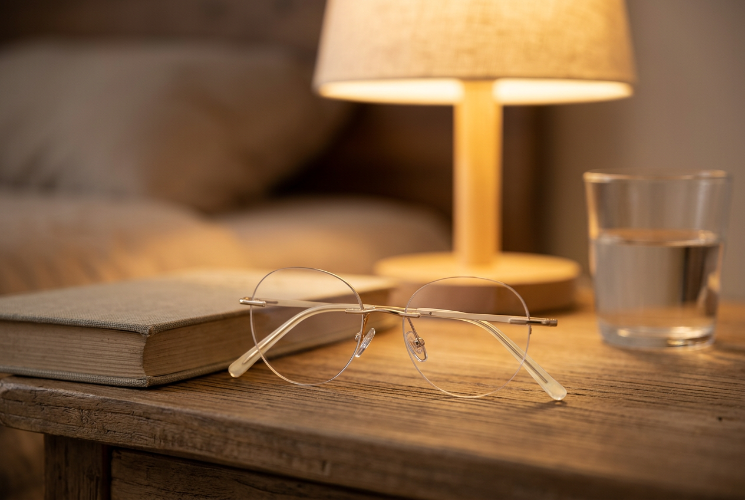
Blue Ray Blocking Glasses reduce some blue light reaching the eyes. The range and amount depend on the lens material, tint, and coating. Two products with similar descriptions may filter quite differently.
Some lenses look clear and filter a small part of the range. Others carry a yellow or amber tint that changes how colors appear. A deeper tint does not prove better sleep results. The useful question is which part of the spectrum the lens reduces and how much light still passes through.
Wavelength and Exposure
Blue light covers a range within visible light. Different parts of that range affect vision and the body's response in different ways. Intensity, timing, duration, and spectral makeup together shape the exposure.
Shoppers rarely get this detail from a product page. A label saying "blue-light blocking" does not describe one standard lens, so reading the manufacturer's explanation of the lens function is more informative than relying on the phrase alone.
Timing, Lighting, and Content
When to Wear Them
Someone who uses a bright screen until late has a different exposure pattern from someone who finishes work in the afternoon and spends the evening in dim light. Some people put glasses on later in the evening to reduce blue light while still using devices. No wearing schedule works for everyone.
Longer wear does not automatically bring greater benefit. Glasses cannot offset every bright source in a room, nor habits that delay sleep, such as stimulating content or an irregular bedtime. A person who spends the evening away from screens has a different need from one who works late.
The Room Matters Too
Ceiling lights, desk lamps, kitchen lighting, and window light all reach the eyes. If a room stays brightly lit, glasses address only part of the exposure. Softer lighting does not require darkness. Lamps can be angled away from the eyes, and unneeded lights switched off, while enough light remains for safe movement.
Screen brightness should suit the room. A very bright display in a dim room is uncomfortable, while a dim one encourages squinting and leaning forward.
| Evening Condition | Adjustment to Consider |
|---|---|
| Bright overhead lights | Use softer lighting where practical |
| Screen looks unusually bright | Adjust the display to suit the room |
| Light reflects from a window | Change screen angle or seating position |
| Several devices left on | Switch off those not in use |
| Bright light near bedtime | Build a calmer lighting routine |
These adjustments work with or without glasses, and they address the whole environment instead of a single product.
What Is on the Screen
Reduced light does not calm the mind. A tense work email, a thrilling video, or an online argument can keep thoughts active long after the device is put away. Someone answering messages in bed may find the messages, not the light, delay sleep.
Moving demanding tasks earlier, choosing calmer content, and ending message checks before bedtime support a smoother shift toward rest. Lenses do not change what appears on the display.
Computer Eye Protection Glasses Are Not Sleep Glasses
Computer Eye Protection Glasses is a broad term. It can describe prescription correction for screen distance, anti-reflective coatings, blue-light filtering, or a combination. Check the intended purpose and not just the name.
Correction for computer viewing helps someone who struggles to see text clearly. Anti-reflective coatings cut distracting reflections from the lens surface. Blue-light filtering is a separate feature, and having it does not mean the product was designed for sleep.
Headaches, blurred vision, or trouble focusing during computer work may signal a changed prescription. These symptoms should not be assumed to come from blue light or answered only with another pair of glasses.
What Research Suggests
Studies on filtering glasses and sleep have produced mixed results. Some report effects on sleep-related outcomes in particular settings, while others find no clear benefit. Differences in lens design, study methods, lighting conditions, and participants make findings hard to apply to everyone.
A claim that glasses filter blue light describes the lens. It does not show that the wearer will fall asleep sooner. A person may like the feel of tinted lenses and see no measurable change in sleep, particularly when lighting and screen habits stay the same. Claims promising guaranteed sleep benefits deserve caution.
Testing the Glasses in Your Own Routine
Personal experience offers useful information, though it does not prove effectiveness for others. A steady approach makes changes easier to notice:
- Note when screen use usually ends and how the room is lit.
- Read what part of the spectrum the lens is designed to filter.
- Keep other habits stable during the trial.
- Observe falling asleep, visual comfort, and evening mood over time.
- Consider workload, stress, and caffeine, which affect sleep independently.
If nothing changes, attention may be better spent on lighting, timing, and content.
Choosing Wisely and Seeking Advice
Buyers should weigh intended use, lens appearance, the filtering description, and comfort. Clear lenses suit people who need natural color, such as someone editing photos. A visible tint alters color perception. Frames should sit comfortably without slipping or pressing, and prescription lenses should match the wearer's visual needs and not just the blue-light feature.
A lens that filters some blue light may still offer an uncertain sleep benefit. Occasional trouble settling after a late session often eases when the evening routine changes. Persistent difficulty falling asleep, repeated waking, or daytime tiredness may have causes unrelated to light, and a healthcare professional can help assess them. Ongoing dryness, eye pain, repeated blurred vision, or headaches during screen use call for an eye examination. Sudden vision changes or significant eye pain need prompt medical attention and should not be managed with glasses alone.
Blue Ray Blocking Glasses and Computer Eye Protection Glasses serve distinct purposes. Their value depends on evening lighting, screen habits, visual needs, and the daily routines that influence sleep.
 PREV:
Your email address will not be published. Required fields are marked *
CATEGORY
NEW PRODUCTS

You can contact us at any time, and we will reply to you within 24 hours.
- 3-11, Optical Mall, No. 777, Huancheng North Road, Duqiao Town, Linhai, Taizhou City, Zhejiang, China.
- +86-576-85885058
- +86-18258841999
- yani@yaniglasses.com
Custom Fashionable Sunglass Manufacturers
