

 English
 русский
 Français
 Español
 عربى
عربى


The Global Hub of Optical Frames Manufacturing
Mar 25,2026
The Geographic Heart of Production
The optical frames industry concentrates heavily in specific regions of China that have developed specialized manufacturing ecosystems over decades. Wenzhou city in Zhejiang Province stands as the undisputed capital, widely recognized as China's Glasses City, hosting dense networks of suppliers, component manufacturers, and skilled labor essential for efficient production. Jiangxi Province, particularly Yingtan, has also emerged as a significant production base where manufacturers benefit from vertically integrated supply chains and proximity to raw material sources. This geographic concentration enables optical frames manufacturers to maintain competitive pricing while delivering quality that serves global markets from Europe to North America and Southeast Asia.
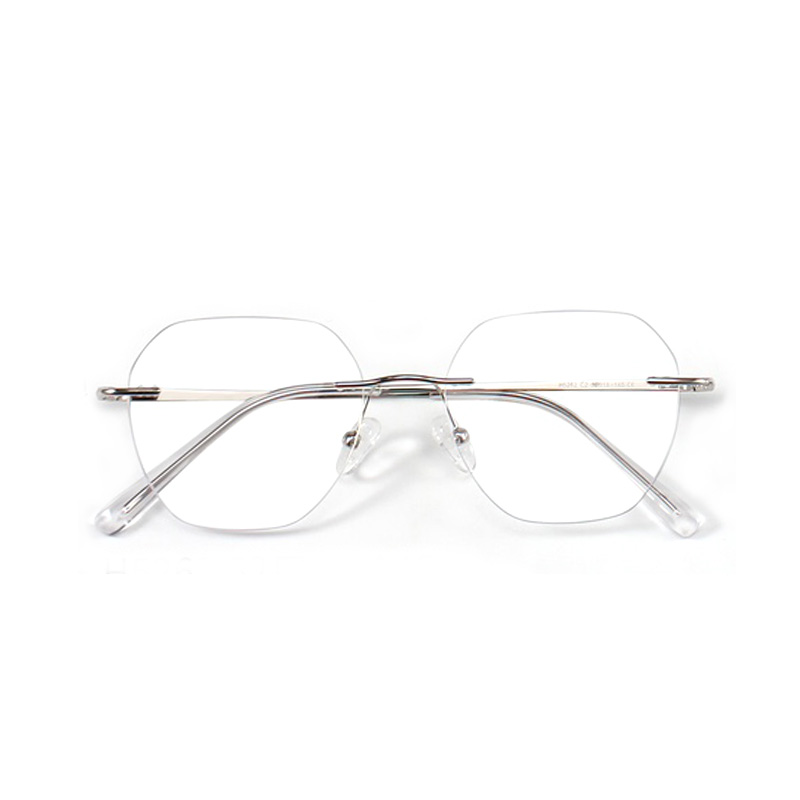
Production Scale and Capacity
Modern manufacturing facilities operate at impressive volumes while maintaining consistency across millions of units. A typical mid-sized manufacturer employs several hundred workers across production facilities spanning thousands of square meters. Annual output among established players ranges from one and a half million to over three million pieces, with some larger operations achieving monthly production capacities reaching eight hundred thousand units. Daily production for high-volume optical frames manufacturers can exceed fifty thousand pieces, supported by hundreds of skilled workers and dozens of quality control technicians who inspect products throughout the manufacturing process.
Material Expertise Across Categories
Successful manufacturers demonstrate proficiency across multiple frame materials to serve diverse market segments. Acetate frames require specialized handcrafting skills, with artisans layering colored sheets and machining them to reveal distinctive patterns and depth. Metal frames utilizing stainless steel, titanium, and aluminum alloys demand precision stamping, welding, and finishing capabilities. Injection-molded frames from TR90 and other thermoplastics offer lightweight durability at accessible price points. A versatile optical frames manufacturer maintains production lines across material types, allowing customers to source complete collections from single suppliers while ensuring consistent quality across different product categories.
Quality Certifications and Standards
Export-oriented manufacturers maintain rigorous certifications demonstrating compliance with international requirements. FDA registration validates suitability for the United States market, while CE marking confirms adherence to European safety standards for medical devices. Additional certifications including ISO 9001 for quality management, BSCI for social compliance, and GMP for good manufacturing practices provide buyers with confidence in supplier capabilities. Laboratory facilities equipped for UV400 transmission testing, impact resistance verification, and polarized lens validation allow optical frames manufacturers to verify compliance before shipment, reducing customer risk and eliminating surprise regulatory issues at destination.
OEM and ODM Service Capabilities
Most manufacturers operate as OEM and ODM providers, producing frames for brands worldwide rather than marketing under their own names. Customization services span frame color matching using reference samples, laser engraving for logo placement, and bespoke packaging design specific to each client's requirements. Engineering departments with decades of collective experience develop original models based on customer sketches, reference images, or conceptual descriptions. Annual new model development among design-focused optical frames manufacturers often exceeds three hundred distinct styles, reflecting the fashion-driven nature of the industry, where continuous refresh drives consumer interest.
Research and Design Innovation
Leading manufacturers invest significantly in design capabilities that differentiate them from commodity producers. In-house design teams collaborate with external creative resources from fashion capitals, including Paris and Shenzhen, ensuring fresh perspectives and contemporary styling. Advanced manufacturing technologie,s including CNC machining, laser cutting, and precision injection molding, enable complex geometries and refined finishing that mass production cannot achieve. Some manufacturers have developed proprietary innovations that reduce frame weight by forty to fifty percent while maintaining structural integrity. A forward-thinking optical frames manufacturer files design patents protecting original creations, building intellectual property portfolios that sustain competitive advantage.
 PREV:
PREV:Lightweight Design Trends in Nylon Lens SunglassesNEXT:
Inside the Facilities Protecting Digital Eyes Worldwide
Your email address will not be published. Required fields are marked *
CATEGORY
NEW PRODUCTS




You can contact us at any time, and we will reply to you within 24 hours.
- 3-11, Optical Mall, No. 777, Huancheng North Road, Duqiao Town, Linhai, Taizhou City, Zhejiang, China.
- +86-576-85885058
- +86-18258841999
- yani@yaniglasses.com
Custom Fashionable Sunglass Manufacturers
