

 English
 русский
 Français
 Español
 عربى
عربى


Choosing PC Frame Sunglasses for Outdoor Adventures
Jun 05,2026
The sunglasses you wore on your last hike probably weren't wrong, exactly — they just weren't quite right either. Maybe they slipped every time you leaned forward on a climb. Maybe the frame felt brittle after a few knocks. Or maybe they sat fine but the glare off the water was relentless despite the tinted lenses. Picking sunglasses for outdoor use is one of those decisions that seems simple until the conditions test them. PC Frame Sunglasses are built specifically for the kind of physical variability that outdoor activity creates — and understanding what the material actually offers, and where it falls short, makes the selection process considerably more grounded.
What Is a PC Frame and Why Does It Matter?
Polycarbonate — PC — is a thermoplastic material developed for applications where impact resistance and light weight need to coexist. It's used in safety equipment, protective gear, and optical products precisely because it absorbs energy rather than shattering under impact. When formed into eyewear frames, that property translates directly into practical durability.
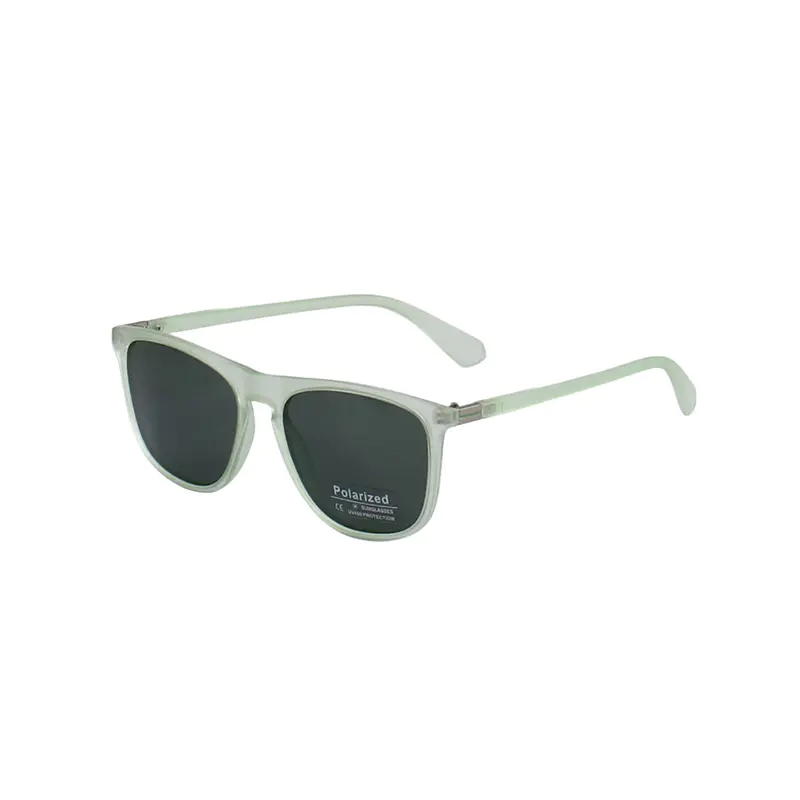
What PC offers that many alternatives don't:
- Impact resistance without brittleness: PC frames flex under stress rather than cracking. A frame that gets sat on, dropped onto a trail, or knocked against a helmet is far more likely to spring back than fracture.
- Low weight: Polycarbonate is genuinely lightweight, which matters on long-duration activities where even small amounts of fatigue accumulate. A frame that doesn't press on the nose bridge or temple after three hours of trail running is doing its job quietly.
- UV stability: The material itself tolerates UV exposure without degrading the way some plastics do. Combined with appropriate lens treatment, this makes PC frames a functionally stable platform for sun protection.
- Color and finish flexibility: PC can be molded in a wide range of colors and finishes, and accepts coatings well — relevant for both aesthetics and functional surface treatments.
None of these properties are unique to PC in isolation. What makes it a practical outdoor eyewear material is how they combine: light, tough, UV-stable, and affordable enough to be a realistic option across a broad range of outdoor use cases.
How Does PC Compare to Other Frame Materials?
Material comparison is where selection decisions get more specific. PC doesn't exist in isolation — it sits alongside TR90, metal, and acetate as the main frame material categories, and each has a different profile of strengths and compromises.
| Material | Weight | Flexibility | Impact Resistance | Comfort Over Time | Typical Use Case |
|---|---|---|---|---|---|
| PC (Polycarbonate) | Light | Moderate | High | Good | Sports, outdoor, active use |
| TR90 | Very light | High | High | Very good | Running, cycling, precision fit |
| Metal (aluminum/titanium) | Light to moderate | Low | Moderate | Moderate — pressure points over time | Fashion, driving, low-impact use |
| Acetate | Moderate | Low | Low | Good — softer contact | Fashion, casual, indoor use |
| Nylon blend | Light | High | High | Good | Performance sports |
TR90 and PC are two materials that come up often in outdoor and sports eyewear conversations, and the comparison is genuinely close. TR90 is more flexible — it has a memory property that allows it to return to its original shape after bending — which makes it better suited to applications where fit precision over irregular head shapes matters. PC is generally stiffer and offers slightly higher impact resistance in hard-contact scenarios.
For activities involving direct impact risk — mountain biking, ball sports, climbing — PC's harder impact resistance profile is a relevant advantage. For activities where fit comfort over long duration is the main concern — trail running, multi-day hiking — TR90 often has an edge. Neither is categorically better; the activity shapes the answer.
Which Outdoor Activities Are PC Frames Suited For?
Not all outdoor use is equivalent. A day at the beach and a technical mountain descent create very different demands on a frame. Matching the material to the activity is where selection gets practical.
Hiking and trail walking: Extended duration on varied terrain puts cumulative pressure on comfort. A lightweight PC frame reduces temple and nose fatigue over a full day. The impact resistance matters when a pack gets thrown down carelessly or sunglasses end up in a jacket pocket with keys. Wrap-around PC frame designs that block peripheral light and wind are well-suited to exposed ridge lines.
Cycling: Road and trail cycling both involve wind, vibration, and potential impact. PC frames handle the vibration environment better than stiffer materials, and the impact resistance matters in crash scenarios. Wide-lens wraparound designs in PC are standard across performance cycling eyewear for this reason.
Running: Weight and fit stability are the priorities in running eyewear. PC frames are light enough to stay unobtrusive and flexible enough to maintain position during the continuous movement of a run. Adjustable nose pads and temple tips in PC-based running frames allow for a more precise fit than fixed designs.
Water activities — kayaking, fishing, beach: Polarized lens pairing is essential for water environments. The PC frame itself tolerates moisture well, but lens selection becomes the primary consideration for glare management on water. A PC frame with polarized lenses addresses both the UV exposure and the reflective glare that flat water surfaces produce.
Driving: PC frames are common in driving eyewear. The impact resistance is relevant in the event of an accident, and the lightweight profile reduces fatigue during long journeys. Polarized lenses reduce road surface glare and improve contrast in variable light conditions.
High-altitude and snow environments: UV intensity increases with altitude and reflects off snow. PC frames provide a stable platform for high-UV-protection lenses, and the impact resistance is relevant in winter sports scenarios.
UV Protection: Frame vs Lens — Which Does the Work?
A common source of confusion: UV protection in sunglasses comes primarily from the lens, not the frame material. This matters because it's easy to assume that a high-quality frame automatically comes with strong UV protection, when the two specifications are largely independent.
What to look for in UV protection:
- UV400 designation: This indicates that the lens blocks light wavelengths up to 400 nanometers, covering both UV-A and UV-B. It's the practical standard for outdoor sun protection.
- Polarization: Polarized lenses reduce glare from reflective surfaces — water, snow, wet road. Polarization is a separate specification from UV protection; a lens can offer UV400 protection with or without polarization.
- Lens tint and light transmission: Different tint levels suit different light conditions. Darker tints for bright sun, lighter tints for overcast conditions, and photochromic options that adjust automatically are all available across PC frame configurations.
- Lens material: The lens itself can be polycarbonate, glass, or other optical plastics. PC lenses add another layer of impact resistance; glass lenses offer higher optical clarity but are heavier and less impact-resistant.
The frame material shapes how well the lens is held and how the eyewear fits and performs over time. But when evaluating UV performance, lens specification is where the due diligence happens.
What Makes Outdoor Sunglasses Comfortable for Long-Duration Use?
Comfort over hours of physical activity is a harder design problem than it looks. A sunglasses frame that feels fine in a shop for two minutes may create pressure points, slip, or cause temple fatigue over a full day. The design features that address this are worth understanding before purchase.
Nose pad design: Fixed nose pads — common in one-piece sports frames — distribute pressure across a broader contact area. Adjustable nose pads allow for fine-tuning to individual face geometry. The right answer depends on face shape; people with lower nose bridges often benefit from adjustable designs.
Temple arm length and tip material: Temple arms that are too short create pressure at the ear; too long and the frame sits too far forward on the face. Rubberized temple tips improve grip, which matters during sweaty or wet activities where slip is a consistent issue.
Frame curvature and wrap angle: A higher wrap angle keeps the lens closer to the face, improving peripheral coverage and reducing airflow around the lens — relevant for wind protection and debris exclusion. Too much wrap can create optical distortion if the lens curves significantly beyond the standard prescription range.
Weight distribution: Total weight matters less than where that weight sits. A frame that balances the lens weight evenly across the nose and temples distributes load better than one that relies heavily on a single contact point.
Ventilation: During high-intensity activity, heat and moisture buildup inside a tight-fitting frame becomes uncomfortable. Frames with ventilation channels in the lens or frame body reduce fogging and improve comfort in aerobic conditions.
Are PC Frames Durable Enough for High-Intensity Outdoor Use?
Durability in outdoor eyewear has two dimensions: structural durability of the frame, and surface durability of the lens and frame finish.
Structural durability is where PC performs well. The material's impact resistance is genuinely useful in the physical context of outdoor sports — accidental drops, pack compression, contact with equipment, the occasional impact. Compared to acetate or standard plastic frames, PC frames handle physical stress without cracking or deforming permanently in many scenarios.
Surface durability is more variable. PC and polycarbonate surfaces scratch more easily than glass. For lens surfaces, scratch-resistant coatings are applied during manufacturing to address this, but coating quality varies between products. A lens with a thin or poorly bonded scratch-resistant coating degrades faster than one with a well-applied coating, regardless of the frame material.
Frame finish durability: The color and surface finish on PC frames can show wear over time with heavy use and UV exposure. Higher-quality frame production uses UV-stabilized pigments and surface treatments that extend color and finish life. This is a manufacturing quality variable rather than a material variable — the same PC material can behave very differently depending on how the frame was produced and finished.
For buyers sourcing eyewear at volume — for resale, for uniform outfitting, or for product development — these manufacturing quality variables are the ones that differentiate product performance in the field rather than material category alone.
Lens Options That Work Well With PC Frames
The lens and frame combination is where outdoor eyewear performance actually comes together. PC frames are compatible with the full range of outdoor lens types, and the right lens selection is application-specific.
Polarized lenses: Reduce glare from horizontal surfaces — water, roads, snow. Useful in many outdoor scenarios and specifically valuable for water activities, driving, and skiing.
Photochromic lenses: Adjust tint automatically based on UV exposure. Practical for activities with variable light conditions — hiking through forest and open terrain, cycling across shifting weather, ski runs between shaded runs and open slopes.
Mirrored lenses: Reflect a portion of incoming light before it reaches the eye. Useful in very high-brightness conditions — high-altitude activities, snow environments, open water. The mirror coating is on the outer surface and is susceptible to abrasion without a protective coating.
Gradient tints: Darker at the top, lighter at the bottom. More common in casual outdoor and driving applications where the primary light source is overhead and clear vision at mid-range is useful.
Category 4 lenses: High UV and visible light attenuation for glacial, high-altitude, or very high-UV environments. Not suitable for driving due to low light transmission, but relevant for mountaineering and similar applications.
Matching lens category to the specific activity and light environment is where meaningful UV protection and visual performance are achieved. The frame's job is to hold that lens correctly and comfortably.
What to Check When Evaluating PC Frame Sunglasses Quality
Whether buying for personal use or evaluating product for broader supply, the quality signals in PC frame sunglasses are observable without laboratory testing.
Hinge quality: Hinges are a common failure point. Flush-set, spring-loaded hinges that move smoothly without play are more durable than loose, externally mounted hinges. A hinge that wobbles side to side when the temple is moved is showing a manufacturing gap.
Lens fit and centering: The lens should sit centered in the frame with even margins all around. Uneven gaps between lens edge and frame suggest either poor mold quality or a lens that has been imprecisely cut.
Nose pad symmetry and seating: Both nose pads should contact a flat surface simultaneously and symmetrically. Uneven nose pad height creates a tilt in the frame when worn that no adjustment corrects.
Surface finish consistency: Under good light, the frame surface should be consistent in color, texture, and gloss across its full length. Visible variation in these properties suggests processing inconsistency.
Lens optical quality: A simple check — hold the lens at arm's length and move it slowly across a straight edge (a door frame, a window edge). Any distortion of that line visible through the lens indicates optical imperfection that will cause eye strain during extended wear.
Outdoor eyewear selection comes down to matching the material, frame design, and lens specification to the specific conditions the sunglasses will face. PC frames offer a useful combination of light weight and impact resistance for many active outdoor applications — they are not the only answer, but they cover a wide range of use cases with a consistent and well-understood performance profile. Where the selection gets more specific is in the lens choice, the fit details, and the manufacturing quality behind what looks like a simple product from the outside. If your sourcing needs involve PC Frame Sunglasses at volume — for outdoor retail, brand development, or category outfitting — working with a manufacturer who can support both standard and customized configurations makes the product development process considerably more efficient. Zhejiang Yani Eyewear Co., Ltd. produces a range of PC frame sunglasses suited to outdoor and sports applications, with options for lens customization, frame design, and OEM development. Sharing your activity category, target market, and product specifications is the practical way to move from general selection principles to a frame and lens combination that works in the field.
 PREV:
PREV:How Do PC Frame Sunglasses Fit Different Face Shapes?NEXT:
What to Know After Buying PC Frame Sunglasses
Your email address will not be published. Required fields are marked *
CATEGORY
NEW PRODUCTS
-
-
Oct 02,2026
-

You can contact us at any time, and we will reply to you within 24 hours.
- 3-11, Optical Mall, No. 777, Huancheng North Road, Duqiao Town, Linhai, Taizhou City, Zhejiang, China.
- +86-576-85885058
- +86-18258841999
- yani@yaniglasses.com
Custom Fashionable Sunglass Manufacturers
