

 English
 русский
 Français
 Español
 عربى
عربى


How Do PC Frame Sunglasses Fit Different Face Shapes?
Jun 12,2026
Finding sunglasses that fit well is more complicated than it looks. A frame that sits beautifully on one person slides down constantly on another, pinches behind the ears of a third, and overwhelms the features of a fourth — even when those people are wearing the same style. The problem is usually not the design. It is the interaction between frame material, frame geometry, and individual facial structure. PC frame sunglasses have become a common recommendation for everyday and outdoor use precisely because polycarbonate's material properties — its light weight, its flex under pressure, its resistance to impact — address several of the fit problems that heavier or more rigid materials create. But material alone does not determine how well a pair of sunglasses works. The relationship between frame shape and face shape is the other half of the equation, and understanding both together is what actually leads to a pair that stays on comfortably through a full day of wear.
What Polycarbonate Is and Why It Affects How Frames Fit
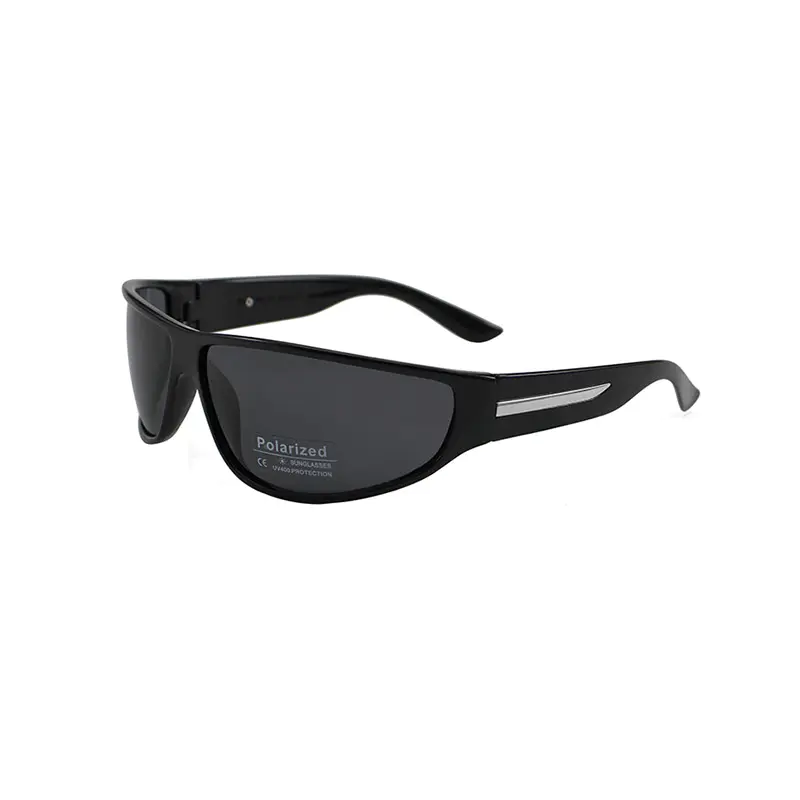
The Material Properties of PC Frames Are Not Just About Durability
Polycarbonate is a thermoplastic polymer originally developed for industrial applications requiring high impact resistance and optical clarity. In eyewear, it was adopted because it could be formed into thin, lightweight frames and lenses that held up under conditions that would crack or shatter other materials. Those same properties translate directly into comfort characteristics that affect daily wearability.
The weight of a frame determines how much pressure it places on the nose bridge and the ears over extended wear. Heavier frames — acetate and metal are both denser than polycarbonate — transfer more downward force to the nose pad area and require the temples to grip more firmly to prevent the frame from sliding. Polycarbonate frames are noticeably lighter than acetate at equivalent thickness, which reduces this pressure across long wear periods.
The flex behavior of polycarbonate also differs from metal. Metal frames, once bent, tend to stay in the new position — they hold their shape through plastic deformation. Polycarbonate has elastic recovery, meaning it can flex slightly under pressure and return toward its original geometry. For faces that fall between standard frame sizes, or for heads that are slightly wider or narrower than average, this flex tolerance makes fitting more forgiving. A polycarbonate frame that is slightly snug will yield a little under wear pressure rather than digging in rigidly.
Key material properties that affect fit:
- Lower density than acetate and various metal alloys — less mass bearing down on the nose and ear contact points during extended wear
- Elastic flex at the temples — accommodates slight variations in head width without requiring manual adjustment
- Impact resistance — frames are less likely to deform or break if dropped or compressed during active use
- Formability during manufacture — allows thinner, lighter frame profiles without sacrificing structural integrity
- Temperature stability — maintains shape across the temperature range encountered in outdoor use
Understanding Face Shape and Why It Matters for Frame Selection
Face Shape Affects Which Frame Proportions Create Visual Balance
Face shapes are generally described by the relationship between forehead width, cheekbone width, jaw width, and face length. These proportions determine where the widest and narrowest points of the face are, and that geometry interacts with frame shape in predictable ways. The principle behind face shape advice is visual balance — using frame geometry to create the impression of a face that is roughly balanced in width at all levels.
The commonly recognized face shapes in eyewear fitting include:
- Oval — balanced proportions, with the forehead slightly wider than the jaw and a gently curved chin. The widest point is at the cheekbones.
- Round — width and length are similar; cheeks are full; the chin is rounded rather than defined.
- Square — strong jaw line approximately as wide as the forehead; angular features throughout; face length and width are close.
- Oblong or rectangular — face is noticeably longer than it is wide; forehead, cheekbones, and jaw are similar in width with relatively straight sides.
- Heart-shaped — wider forehead narrowing significantly to a pointed or narrow chin.
- Diamond — narrow forehead and jaw with wider, prominent cheekbones.
No real face fits exactly into a single category, and the categories themselves are descriptive rather than prescriptive. But they provide a useful starting point for thinking about which frame shapes and proportions will sit harmoniously on a given face rather than drawing attention to the proportions the wearer would prefer to minimize.
How PC Frame Shapes Work for Different Face Shapes
Which Frame Geometries Create the Most Balanced Fit Across Common Face Shapes?
The pairing of frame shape with face shape works through a straightforward visual logic: frames with contrasting geometry to the face shape tend to create better balance than frames that echo the face's natural contours. A round face generally looks more proportional in angular frames; an angular face reads as softer in rounded frames.
Round faces and angular PC frames
Round faces benefit from frames that add definition — flat, angular shapes that interrupt the continuous curves of the face. Rectangular or square frame shapes in polycarbonate work well here because they draw the eye horizontally and create the impression of more defined structure. Frames that sit slightly higher on the face and have a clear top line visible above the eyebrow add vertical structure. Oversized round or circular frames tend to reinforce the roundness and are generally less flattering.
Square faces and curved or wraparound frames
Square faces have strong horizontal lines — the jaw and forehead are both relatively straight and similarly wide. Rounded or oval PC frame shapes soften this angularity by introducing curves that contrast with the face's natural geometry. Frames with gentle curves, round or oval lenses, and no strong angular corners create a more balanced appearance. Rimless or semi-rimless polycarbonate designs can also work well here by reducing the visual weight of the frame.
Oval faces and versatile frame options
Oval faces are generally considered adaptable to a wide range of frame shapes because the proportions are balanced to begin with. The challenge is avoiding frames that disrupt the natural balance — very oversized frames can overwhelm; very small frames can look disproportionate. Most PC frame styles work well on oval faces, which makes this face shape a useful reference point for general frame design decisions.
Oblong faces and wide, short frames
Long faces read more proportional when the frame adds horizontal visual weight — wide frames that extend to or slightly beyond the face's width, with a shallow vertical dimension. Aviator-style and wide rectangular PC frames are commonly recommended. Tall, narrow frames extend the face vertically and tend to make it appear longer.
Heart-shaped faces and bottom-heavy or rimless frames
Heart-shaped faces are wider at the top and narrow at the chin. Frames that draw attention downward — designs that are wider at the bottom than the top, or that have decorative details at the lower portion — create better balance. Light polycarbonate frames with thin upper rims and slightly more substantial lower rims achieve this subtly. Rimless designs, which have minimal visual weight throughout, also tend to work well by not adding visual mass at the already-wide forehead.
Diamond faces and detailed upper frames
Diamond faces have narrow foreheads and jaws with wide cheekbones as the prominent feature. Frames that add width at the forehead and have distinctive detail in the upper portion — brow bars, contrasting upper frame color, or cat-eye shapes — balance the prominent cheekbones by drawing attention upward.
Comfort Factors That Go Beyond Frame Shape
What Structural Details Determine Whether a Frame Stays Comfortable Through a Full Day?
Frame shape and face shape are the visual part of the fit equation. The structural details of how the frame makes contact with the face determine the physical comfort over time. Polycarbonate's material properties interact with these contact points in specific ways.
Nose bridge fit
The nose bridge is the primary load-bearing contact point of any glasses frame. Bridges that are too narrow concentrate pressure on a small area of the nose, creating soreness within an hour or two of wear. Bridges that are too wide allow the frame to sit lower than intended and may cause the lenses to be positioned below the visual field. Polycarbonate frames are often designed with integrated nose bridge shapes rather than adjustable nose pads — this simplifies the frame aesthetically but means nose bridge width must match the wearer's anatomy reasonably well at the point of selection.
Some polycarbonate frames include soft-touch nose pad inserts in TPE or silicone that distribute pressure and improve grip. This is particularly relevant for frames used in active or outdoor conditions where perspiration can cause frames to slide.
Temple length and ear contact
Temple arms that are too long allow the frame to sit forward on the face; too short, and they press into the side of the head with the curve not reaching far enough behind the ear. Polycarbonate temples can be gently warmed and adjusted by a trained optician to customize the curve angle and position for individual anatomy. The flex behavior of polycarbonate means that even without adjustment, the temple arms have some tolerance for variation in head width.
Frame weight distribution
Even among lightweight polycarbonate frames, the distribution of weight across the frame affects comfort differently. Frames with heavier lens sections and thinner temples place more weight forward on the nose. Frames balanced across the lens, bridge, and temple sections distribute weight more evenly. For extended wear — driving, outdoor activities, working at a desk — balanced weight distribution makes a noticeable difference in how the frame feels at the end of the day.
PC Frame Sunglasses Across Usage Scenarios
Does the Intended Use Affect Which Frame Style and Fit Is Appropriate?
The same face shape may need different frame consideration depending on how and where the sunglasses will be used. A frame that works well for casual urban wear may not stay securely in place during active outdoor use.
| Usage Scenario | Key Fit Requirements | Recommended PC Frame Characteristics |
|---|---|---|
| Daily urban wear | Comfort over extended periods | Lightweight, flexible temples, balanced weight |
| Driving | Wide lens coverage, no visual obstruction | Larger lens area, minimal frame interference at peripheral vision |
| Sports and outdoor activity | Secure fit, no slippage during movement | Wraparound or close-fitting designs, grip nose pad |
| Beach and water exposure | Resistance to salt and UV, secure in wind | Tight temple fit, UV-rated lens, corrosion-resistant frame |
| Fashion and social occasions | Visual proportion on the face | Face-shape-appropriate geometry, aesthetic balance |
| Extended outdoor travel | Durability and comfort across conditions | Impact-resistant PC material, comfortable nose bridge |
For active use, the polycarbonate material advantage is clear. Frames that can flex slightly during movement maintain grip on the face better than rigid materials, and the impact resistance of polycarbonate means a dropped pair on rocky terrain or a hard surface is less likely to result in a cracked frame.
How PC Frames Compare to Other Common Eyewear Materials
Where Does Polycarbonate Sit Relative to Acetate and Metal in Terms of Fit and Feel?
Each of the three main eyewear frame materials — polycarbonate, acetate, and metal — creates a different wearing experience. Understanding the differences helps clarify when polycarbonate is the right choice and when another material might serve better.
Polycarbonate vs acetate
Acetate frames are typically heavier than polycarbonate at equivalent dimensions, and they are stiffer — there is less natural flex in an acetate temple arm. The weight difference is noticeable during extended wear. Acetate offers more options for complex coloration and surface finish, which is why it remains popular in fashion eyewear. For wearers prioritizing comfort over aesthetics, or for active use where frame weight and durability matter, polycarbonate tends to be the more practical material.
Polycarbonate vs metal
Metal frames are often thinner in profile than polycarbonate because metal's structural strength allows for finer cross-sections. They are generally adjustable — an optician can bend metal temple arms and nose pads to fine-tune fit. This adjustability is a meaningful advantage for wearers whose anatomy is difficult to fit with fixed-geometry frames. Polycarbonate frames are lighter and more impact-resistant than some metal options, but lack the precise adjustability of metal. For wearers who have found a polycarbonate frame that fits well out of the box, the weight and durability advantages are considerable.
A Framework for Selecting the Right Frame
What Steps Should Guide the Decision from Face Shape to Confirmed Selection?
Moving from general principles to an actual selection decision benefits from a structured approach:
- Identify your face shape. Look at the width of your forehead, cheekbones, and jaw relative to each other, and note whether your face is longer than wide or approximately proportional.
- Match frame shape to face shape. Use the general principles — angular frames for round and oval faces, curved frames for square faces, wide frames for oblong faces, upper-detail frames for diamond faces — as a starting point.
- Consider the primary use scenario. Active and outdoor use calls for different structural features than fashion or daily urban wear.
- Evaluate nose bridge fit. The bridge should sit without pressure at a single point. If integrated pads leave marks or soreness within an hour, the bridge width is not matched well to your nose anatomy.
- Check temple fit. Temples should curve behind the ear without pressing into the skull. For polycarbonate frames, slight warmth adjustment by a trained fitter can fine-tune the temple curve.
- Assess lens size relative to face proportions. Very large lenses on a narrow face read as overwhelming; small lenses on a wide face can look disproportionate. The outer edge of the lens should not extend significantly past the sides of the face.
- Test for weight distribution during extended wear. Wear a candidate frame for at least several minutes and note whether the weight settles evenly or concentrates at the nose bridge.
Matching Material and Shape to the Individual Wearer
The case for polycarbonate in eyewear is built on a combination of properties that work together rather than any single standout characteristic. The lighter weight reduces strain across long wear periods. The flex behavior accommodates facial geometry that does not fit standard sizing precisely. The impact resistance extends the working life of the frame under real-world conditions. These are functional advantages that show up differently depending on the face shape wearing the frame and the conditions under which it is worn.
Selecting frames that sit comfortably, stay securely in place, and look proportional is not a matter of luck — it follows from understanding how frame shape, frame material, and facial geometry interact. For wholesalers and retailers sourcing eyewear with range and consistency, and for individual buyers who have struggled to find frames that stay in place through an active day, the polycarbonate frame category offers a practical combination of properties across a wide range of face shapes and use scenarios. Zhejiang Yani Eyewear Co., Ltd. manufactures polycarbonate frame sunglasses across a range of styles and face-shape considerations, with production capability spanning fashion, sport, and everyday categories. If you are sourcing PC frame sunglasses for retail or distribution, reaching out to discuss style options and production specifications is a straightforward next step.
 PREV:
PREV:How Do Blue Light Reduction Glasses Help Office Work?NEXT:
Choosing PC Frame Sunglasses for Outdoor Adventures
Your email address will not be published. Required fields are marked *
CATEGORY
NEW PRODUCTS




You can contact us at any time, and we will reply to you within 24 hours.
- 3-11, Optical Mall, No. 777, Huancheng North Road, Duqiao Town, Linhai, Taizhou City, Zhejiang, China.
- +86-576-85885058
- +86-18258841999
- yani@yaniglasses.com
Custom Fashionable Sunglass Manufacturers
